Privacy law, enforcement and technology—coverage for everyone in the privacy field.
Practical analysis of privacy litigation, website tracking, AI governance, global regulation and the technology organizations use to manage risk.
Latest from the Privacy Desk
All dispatches →Robinson v. Meta Platforms and the CDAFA Consent Defense: An Online Terms Playbook for Web Tracking Class Actions in the Post-SB 690 Era
The California Comprehensive Computer Data Access and Fraud Act (CDAFA)—a 1980s computer crime statute—has become a fixture of the web tracking class…
 LAW FIRMS
Swigart Law Group Review: Legitimacy, CIPA Claims, Arbitration and Settlements
You received a demand letter from Swigart Law and want to know if they are legitimate and if you should do something…
 DATA
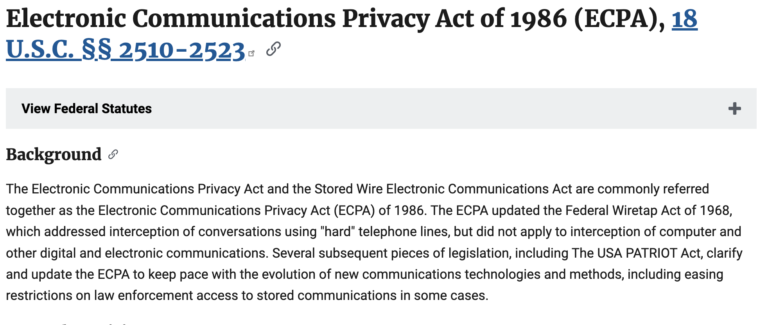
Stored Communications Act Privacy Lawsuits: What Businesses Need to Know About Stored Messages and Data Disclosures
A Google privacy case over the disclosure of search queries ended in a $23 million settlement approved in 2023.
AI Governance Minimization: What Privacy’s Data Minimization Principle Teaches Us About Running AI Governance
Most AI governance programs fail in one of two ways. Some collapse under their own weight: an intake form with sixty questions,…
 GOVERNANCE RISK AND COMPLIANCE
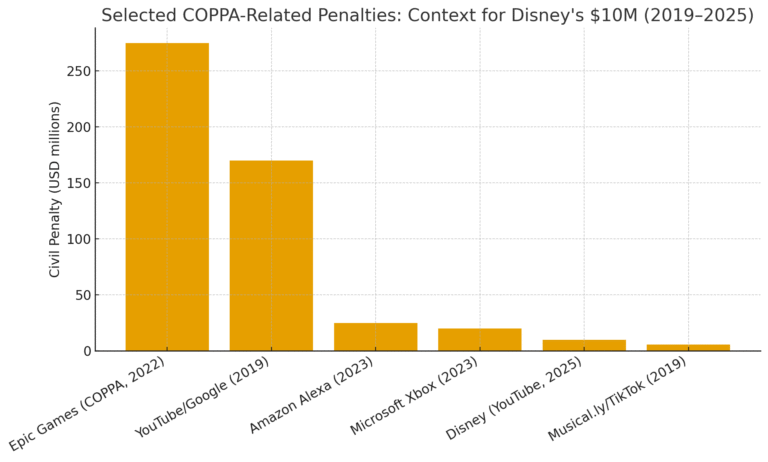
COPPA Is Quietly Becoming the Backbone of U.S. Kids’ Online Safety
It is easy to treat the Children’s Online Privacy Protection Act as a relic.
 COOKIES
Meta Pixel’s November 12 On-Device Conversion Update: What Agencies, Marketers and Privacy Officers Must Check Before It Switches On
In August 2025, a San Francisco jury found that Meta violated the California Invasion of Privacy Act by obtaining women’s menstrual cycle…
 AI
The 10 Most Costly AI Governance Failures of the Last Two Years
AI governance is not failing because companies lack policies.
 GOVERNANCE RISK AND COMPLIANCE
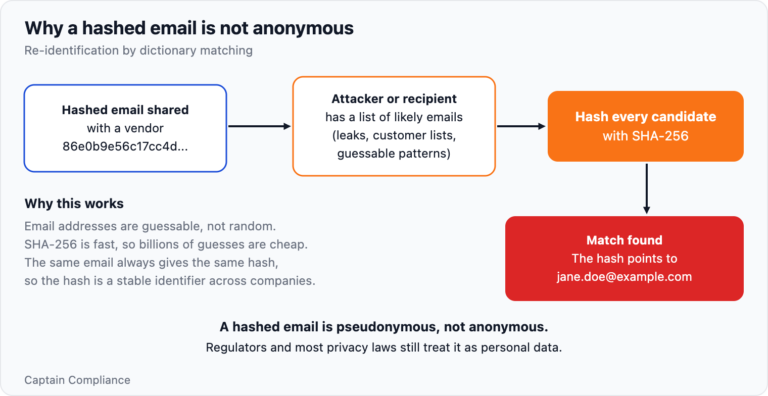
Hashing Algorithm: What It Is, How It Works, and Why It Matters for Data Privacy
A hashing algorithm is a mathematical function that converts input data of any size into a fixed-length string of characters called a…
Wisconsin Electronic Surveillance Control Law: Privacy Suits, Tracking Pixels and One-Party Consent
Wisconsin generally permits a participant to record a communication, or another person to intercept it with a participant’s prior consent.
 COOKIES
Supreme Court Weighs Whether a Blockbuster-Era Video Privacy Law Can Police Modern Tracking Pixels
On October 14, 2026, the justices spent nearly 90 minutes poking at a 1988 statute written for VHS rental records and asking,…
North Carolina Electronic Surveillance Act: One-Party Consent, Privacy Lawsuits and Business Risk
North Carolina is a one-party consent state. For a business reviewing call recording or website tracking, that can be an important legal…
 COOKIES
Zero-Click Spyware Through Ads: What Publishers Must Check After the Discover-Tech Suspension
For about six years, an Israeli company called Discover-Tech sat on the list of vendors that IAB Europe’s Transparency & Consent Framework…