AI Governance Minimization: What Privacy’s Data Minimization Principle Teaches Us About Running AI Governance
Most AI governance programs fail in one of two ways. Some collapse under their own weight: an intake form with sixty questions, a committee that meets monthly to…
Latest from the Privacy Desk
All dispatches → AI
AI The 10 Most Costly AI Governance Failures of the Last Two Years
AI governance is not failing because companies lack policies.
The FRIA Is Coming: Why AI Governance Must Assess Connectors, Permissions and Data Access — Not Just the Model
Most companies preparing for the EU AI Act’s Fundamental Rights Impact Assessment requirements are asking familiar questions.
Cantwell’s Six-Point AI Governance Plan Would Replace Voluntary Guardrails With Continuous Oversight
The next major fight over U.S. artificial intelligence regulation may not be about whether AI should be tested before deployment. Increasingly, policymakers…
AI Governance Is Becoming a Real Profession — and Companies Need to Decide Who Actually Owns It
Companies have spent the last two years creating AI committees, appointing “responsible AI” leads, adding artificial intelligence to privacy programs and asking…
AI Governance: Know What Your AI Does, Who Approved It, and What Data It Uses
Your marketing team uses AI to write campaigns. Customer service has an AI chatbot. HR is evaluating a tool that ranks applicants.…
Maryland’s AI Framework Is a Legislative Agenda, Not a Principles Poster
Governor Wes Moore published an AI framework on September 22 built around three lines: protect residents, give workers a voice, and keep…
Your AI Agent Is Still Your Problem: The FTC’s Message to Businesses Deploying Autonomous AI
AI agents can browse websites, send emails, modify files, query databases, interact with customers, call APIs and increasingly perform work without waiting…
Illinois Just Made Model Weights a Security Asset. Encryption at Rest Will Not Cover It.
Illinois did not regulate a chatbot. It regulated the file that is the model. In early July 2026, Governor JB Pritzker signed…
AI Audits Are the New Guardrail. The White House Accord Does Not Make Them Real.
September made AI auditing the default answer to a month of incidents.
Is Your Customer Service Call a Biometric Event? Lowe’s Voiceprint Lawsuit Signals a New BIPA Risk for AI
A routine call to customer service may be becoming something very different under Illinois privacy law.
Governors Call for Federal AI Guardrails as States Build Their Own Rules
The United States is rapidly developing a state-by-state system for regulating artificial intelligence, and some of the governors creating those rules now…
 AI
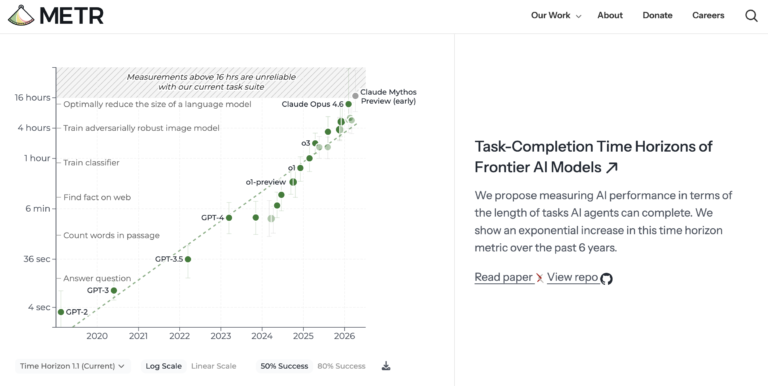
AI Inside METR: The Nonprofit Quietly Stress-Testing the World’s Most Powerful AI Models
If you follow AI safety or AI governance even casually, you have probably seen the acronym METR attached to a footnote in…