Alex Proctor
Alex Proctor is a privacy and data protection professional with 15 years of experience spanning healthcare, critical infrastructure, and other highly regulated industries. With a strong foundation in cybersecurity, Alex brings a unique perspective to privacy and AI leadership. He led a cybersecurity consulting practice for half a decade and has led cybersecurity and privacy governance, risk, and compliance programs at a prominent EPC firm. He has also developed AI governance training resources used by cyber governance professionals globally. Alex serves as the Chief Trust & Privacy Officer at Captain Compliance—a privacy technology startup dedicated to simplifying complex privacy challenges and reducing privacy risk. The company’s streamlined platform addresses cookie consent management, dynamic privacy notices, data subject request processing, and more. Alex graduated from Oakland University with a bachelor’s degree in Management Information Systems (MIS). He holds numerous industry certifications, including the ISC2 CISSP and CCSP, as well as the IAPP CIPM, CIPP/E, CIPP/US, CIPT, and AIGP. Recognized by the IAPP as a Fellow of Information Privacy (FIP), Alex also chairs the IAPP Detroit KnowledgeNet chapter. He fosters dialogue and knowledge-sharing within the privacy community.
Posted articles 77 TOTAL
 GDPR
GDPR The UK ICO Signals a Major Shift on Online Advertising, Consent Fatigue, and the Future of Cookie Rules
The UK Information Commissioner’s Office has opened the door to one of the most important changes in online advertising regulation since the…
 AI
AI When the Voice Isn’t Real but the Legal Risk Is: AI Governance in the Creative Industries
Synthetic voices, AI-generated likenesses, and deepfake performances are forcing a reckoning across entertainment, advertising, and media — and the legal frameworks scrambling…
U.S. Warns Europe Its AI Sovereignty Push Could Trigger a Transatlantic Tech Trade Clash
The growing fight over artificial intelligence is no longer just about innovation, regulation, or cybersecurity.
 AI
AI California’s SB 53 and New York’s RAISE Act Mark the New Frontier of AI Governance
For the last several years, artificial intelligence regulation in the United States has lived mostly in hearings, policy papers, voluntary commitments, and…
 GOVERNANCE RISK AND COMPLIANCE
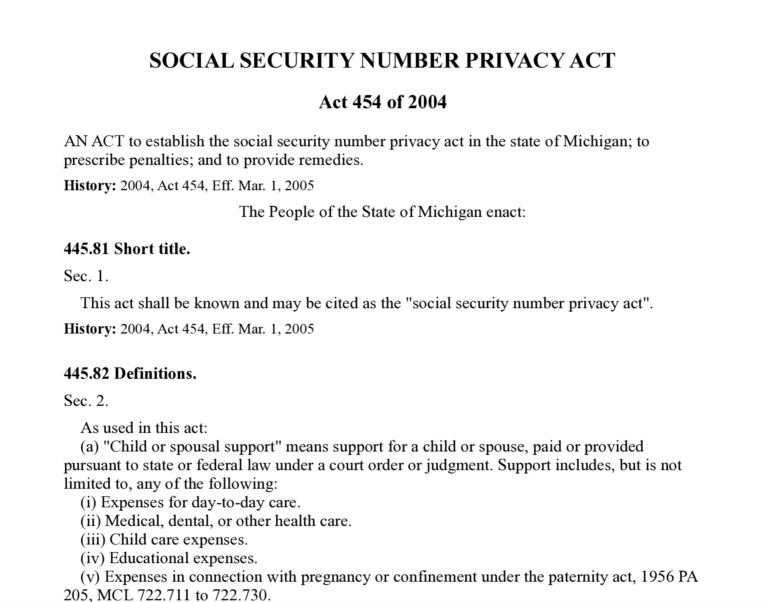
 Michigan Social Security Number Privacy Act
The Michigan Social Security Number Privacy Act (SSNPA), enacted as Public Act 454 of 2004 and codified at MCL 445.81 et seq.,…
Supreme Court Takes Up FCC Privacy Enforcement: A Defining Moment for Data Accountability in the U.S.
The United States Supreme Court’s recent oral arguments in the high-stakes dispute between the Federal Communications Commission (FCC) and telecom giants AT&T…
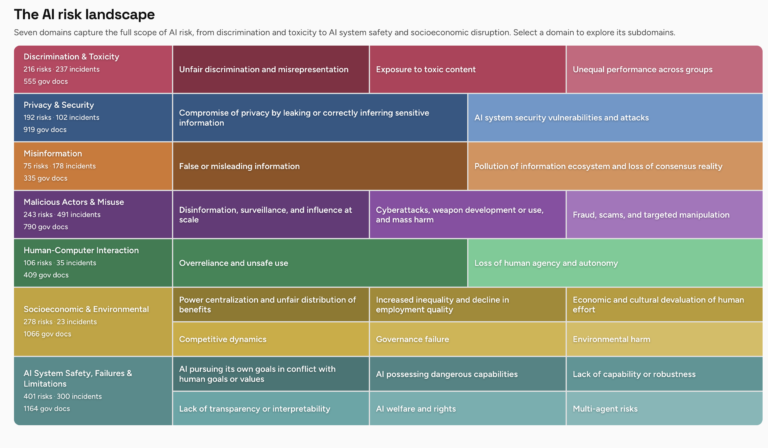
MIT AI Risk Navigator: A Comprehensive Interactive Platform for Mapping and Managing AI Risks
The MIT AI Risk Navigator (airi-navigator.com) is a groundbreaking interactive web tool that unifies multiple datasets from the MIT AI Risk Initiative…
 CALIFORNIA PRIVACY – CPRA
 The Law Is Clear. The Companies Knew. They Ignored It Anyway.
There is a particular kind of corporate lawbreaking that is, in some ways, more troubling than the brazen kind.
AI Governance Is Accelerating: Why Privacy Professionals Must Rethink Their Stack
Artificial intelligence is no longer an emerging technology sitting at the edge of enterprise adoption.
UK Biobank Data for Sale in China: How a Major Medical Research Breach Exposes Deep Flaws in Data Governance
The news landed like a quiet bombshell: detailed health records from nearly half a million UK Biobank participants were listed for sale…
The SECURE Data Act
Ready for a Comprehensive Analysis of America’s Latest Attempt at Federal Privacy Law?
AI Guardrails Give Governance Teams a False Sense of Security
Here’s What They’re Missing The most widely deployed AI safety mechanism in enterprise settings today was never designed to manage legal risk.
Check your own site
See what your website is actually sending.
Run a free privacy audit and find the cookies, pixels, session-replay tools, and trackers running right now — plus the ones that commonly show up in privacy claims. A real review of your site, not just a scan.