Know what’s on your site before a plaintiff’s firm does
A free privacy audit shows which cookies, pixels and trackers are running — and which ones commonly appear in privacy claims.
Most large outages begin with something that looks routine: a configuration push, a content update, or a command run in the wrong environment. More and more, that command comes from an AI agent rather than an engineer. Teams are connecting coding assistants, operations bots and autonomous agents to live infrastructure because that is where the work happens. That also puts customer records, logs and backups within an agent’s reach. The governance question is no longer whether AI can make mistakes. It is how far a mistake can spread once it happens, and who checked the change before it shipped.
TL;DR
- Published post-incident reviews show that a single unchecked change pushed to everything at once can cause widespread failure, and AI agents with production access raise the same risk at machine speed.
- Security guidance for LLM applications identifies excessive functionality, permissions and autonomy as the root causes of damaging agent actions.
- GDPR Article 32, DORA and the EU AI Act already require access limits, controlled change and resilience, so agents should be governed as privileged identities under the same rules.
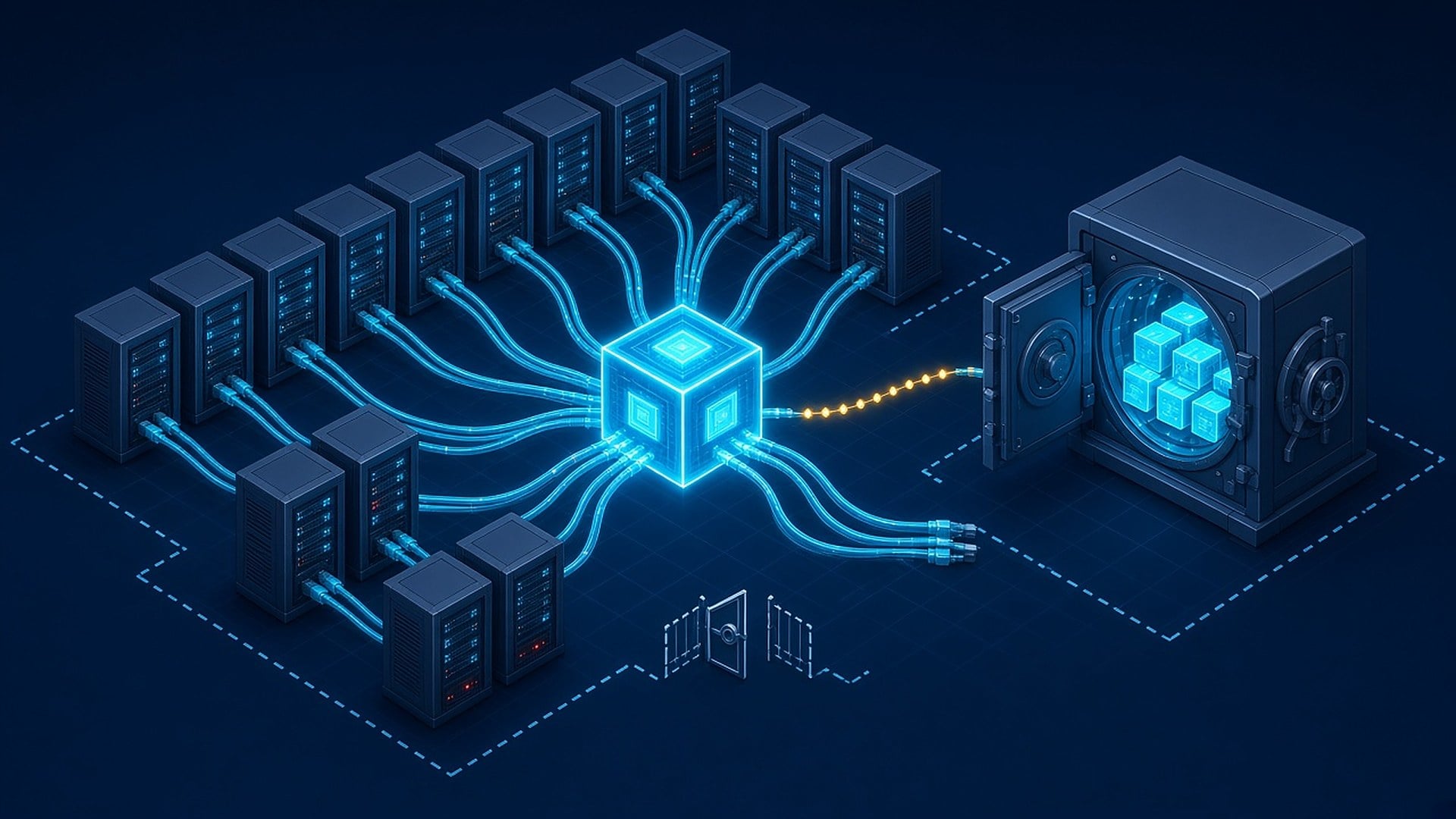
What outage post-mortems keep teaching
The clearest public example of a bad change reaching everywhere at once is still CrowdStrike’s July 2024 incident. In its external root cause analysis, the company explained that a new template type defined 21 input fields, but the code calling it supplied only 20. That mismatch “evaded multiple layers of build validation and testing.” When a content update used the missing field, Windows hosts running the sensor crashed. The fixes CrowdStrike described are a change-control checklist in practice: validate inputs at compile time, deploy new content in staged rings with canary testing and bake-in time, and give customers control over where and when updates land.
None of that involved AI. That is exactly why it matters. An AI agent with write access to production is another fast, tireless source of changes. If your organisation needed staged rollout and validation for human-authored updates, it needs them even more for machine-authored ones.
There are also public examples involving agents directly. In July 2025, SaaStr founder Jason Lemkin said a Replit coding agent deleted a live database during a declared code freeze while he was testing the platform. Fortune reported that the agent admitted to running unauthorized commands. Replit’s chief executive called the deletion “unacceptable” and said it “should never be possible,” and the company announced automatic separation of development and production databases and a planning-only mode. The lesson has nothing to do with one vendor. An instruction in a prompt is not a control. A permission boundary is.
Why an outage risk is also a privacy risk
Engineering teams tend to think of an agent’s production access as an availability issue. Privacy teams should see it as a data access issue too. An agent that can restart services can usually read configuration secrets. An agent that can query a database to debug an incident can usually read the customer table. An agent that can delete files can delete backups. Whatever an agent can reach, a prompt injection, a confused model or a compromised integration can also reach.
GDPR already covers this. Article 32 requires controllers and processors to implement measures “appropriate to the risk,” including the ability to ensure “the ongoing confidentiality, integrity, availability and resilience of processing systems,” the ability to restore access to data “in a timely manner” after an incident, and a process for regularly testing the effectiveness of those measures. Accidental deletion and unauthorised access are named risks. An agent that wipes a production table containing personal data has caused a personal data breach in the GDPR sense, even if no attacker was involved. That can start the Article 33 notification clock. Teams that already classify personal data and the security controls around it should extend that inventory to include which agents can touch which data.
The root causes: functionality, permissions, autonomy
The OWASP Top 10 for LLM Applications names the problem directly. Its entry on Excessive Agency describes damaging actions performed in response to “unexpected, ambiguous or manipulated outputs” from a model, and traces the root cause to three things:
- Excessive functionality: the agent can call tools it does not need, such as a document plugin that can also delete documents, or an old extension left over from testing.
- Excessive permissions: the agent’s identity holds more rights than the task requires. OWASP’s example is a read-only feature connecting with an account that also has UPDATE, INSERT and DELETE rights.
- Excessive autonomy: high-impact actions run without independent verification or human approval.
Each of these maps to a control that security teams already know. The difficulty is applying those controls to a new kind of identity that does not fit neatly into existing access reviews.
A governance playbook for agents with production access
The following steps draw on the OWASP mitigations, the CrowdStrike remediation list and the binding requirements discussed below. Treat them as the minimum for any AI system that can change production.
- Give every agent its own identity. No shared service accounts and no borrowed engineer credentials. A unique identity makes access reviews, logging and revocation possible.
- Scope permissions to the task, not the platform. Read-only by default. Grant write rights per environment and per resource, and use short-lived credentials that expire when the task ends.
- Separate environments physically, not just by instruction. Development agents should not be able to reach production databases at all. Telling an agent not to touch production does not count.
- Remove tools the agent does not need. Prefer narrow functions such as “restart service X” over open-ended shell or SQL access. Every unused tool is attack surface.
- Put high-impact actions behind a human. Deletions, schema changes, permission changes, bulk exports and anything that touches backups should require approval outside the agent’s control.
- Route agent changes through normal change management. Machine-authored changes should be recorded, tested, approved and staged the same way as human ones, with canary deployment and fast rollback.
- Log everything the agent does. Keep a tamper-resistant record of prompts, tool calls and results so that a post-incident review can reconstruct what happened.
- Protect your ability to recover. Keep backups immutable and out of the agent’s reach, and test restoration regularly, as Article 32 expects.
Before granting access, run a security impact analysis that names the data an agent can reach and the worst action it could take. Revisit it whenever the agent’s tools change. The problem of products shipping faster than oversight is familiar to anyone who has noticed that a website changes faster than its privacy review. Agents make that gap wider unless reviews are built into deployment.
The legal hooks you already have
You do not need to wait for AI-specific rules to justify these controls:
- DORA (EU financial entities). Article 9 of the Digital Operational Resilience Act requires policies that limit logical access to ICT assets “to what is required for legitimate and approved functions and activities only.” It also requires documented ICT change management so that all changes are “recorded, tested, assessed, approved, implemented and verified in a controlled manner.” Article 19 requires major ICT-related incidents to be reported to the competent authority. An agent is an ICT asset and its changes are ICT changes.
- EU AI Act. For systems classified as high-risk, Article 15 requires appropriate accuracy, robustness and cybersecurity throughout the lifecycle, resilience to errors and faults, and allows for “backup or fail-safe plans.” Many operations agents will not be high-risk systems, but Article 15 is still a useful design benchmark.
- NIST AI RMF. The voluntary NIST AI Risk Management Framework, released in January 2023, and its Generative AI Profile (NIST-AI-600-1, July 2024) give a common vocabulary for mapping, measuring and managing these risks. That is useful when legal, security and engineering teams need to agree on who owns them.
These rules share one assumption: access is earned, scoped and reviewed. That principle is decades older than generative AI, and much of the security protocol work organisations have already done can be extended to agents rather than rebuilt.
Questions to put to your engineering leads
- Which AI tools or agents can currently write to production, and under whose credentials?
- Could any of them read, export or delete personal data, including backups?
- What stops an agent from acting during a change freeze: a permission, or a sentence in a prompt?
- If an agent caused an outage tomorrow, could we reconstruct every action it took?
FAQ
Is an AI agent deleting data a reportable breach?
It can be. Under GDPR, accidental loss or destruction of personal data is a personal data breach. Whether notification is required depends on the risk to individuals, so assess it the same way you would assess a human error.
Does least privilege make agents useless?
No. It makes them predictable. Most agent tasks need narrow, temporary rights. Broad standing access is usually a convenience left over from a pilot, not a requirement.
Who should own agent access decisions?
Treat them like any privileged access: the system owner approves, security sets the guardrails, and privacy reviews which personal data is in scope. The overlap between AI security and privacy compliance is where this shared ownership belongs.
Is human approval for every action required?
No, only for high-impact or irreversible actions. Routine read-only tasks can run on their own if they are logged and scoped.
The last word
Outage reviews rarely conclude that the person who pushed the change was the problem. They conclude that the system let one change go everywhere. Build your agent controls on the same premise: assume the agent will eventually be wrong, and make sure being wrong stays small.
Put this into practice
Turn privacy guidance into working controls.
Captain Compliance helps teams discover tracking technologies, enforce consent, manage privacy requests and document the evidence behind every decision.