Know what’s on your site before a plaintiff’s firm does
A free privacy audit shows which cookies, pixels and trackers are running — and which ones commonly appear in privacy claims.
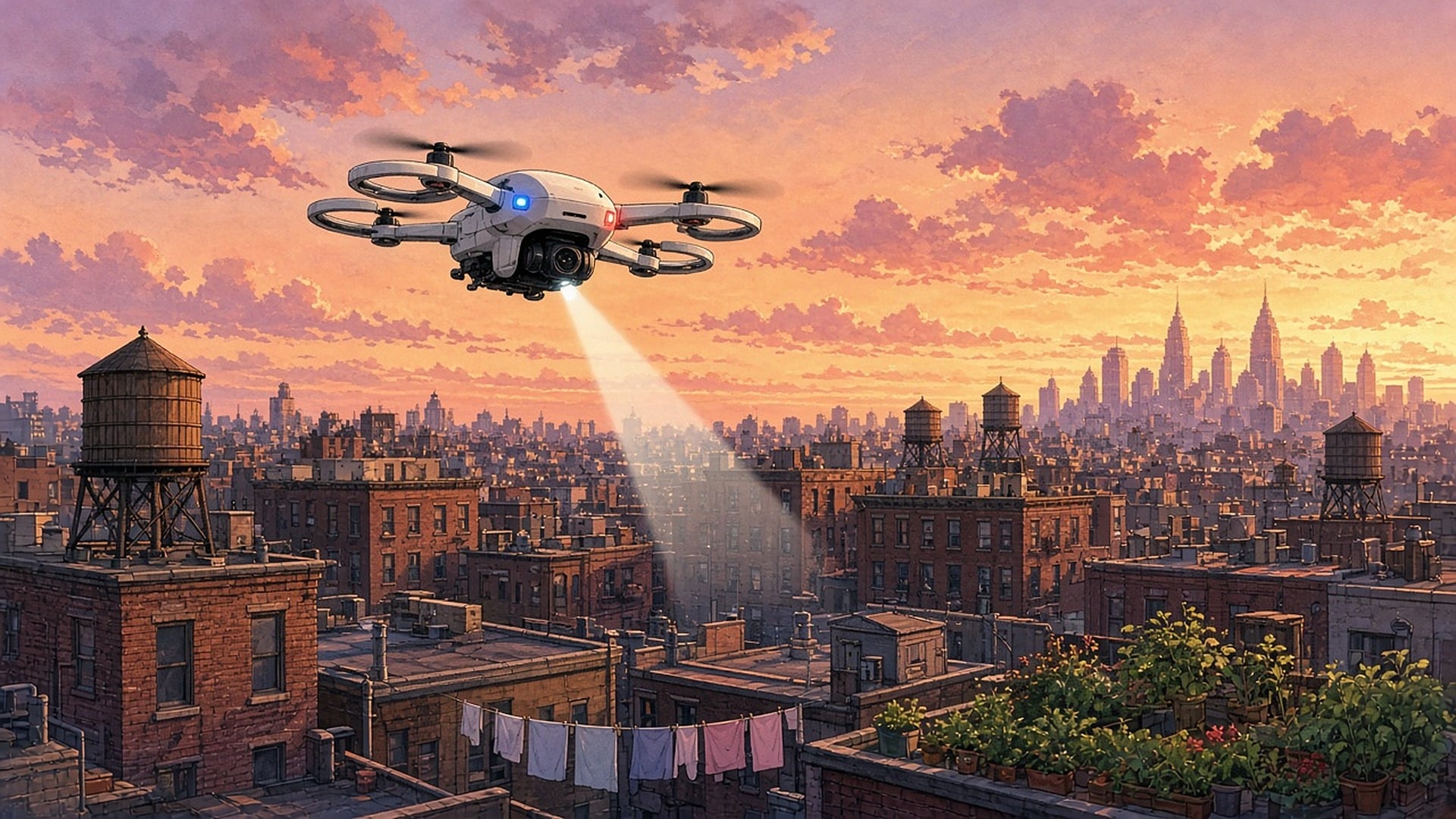
Police drones that launch the moment someone dials 911 are moving from pilot projects into ordinary city budgets, and the fight over them is moving with them. In an opinion piece published by The Washington Post on November 5, 2026, Brian O’Hara, who led the Minneapolis Police Department from 2022 until May 2026 and earlier served as Newark’s public safety director, argues that the answer to the backlash is not to ground the aircraft but to write enforceable rules before they fly.
His piece is advocacy, and it is written from the perspective of a chief who wanted the technology. Read as a policy document, though, his four rules amount to something privacy professionals will recognize: a data governance program for a camera that can be anywhere in a city within minutes. That framing is useful well beyond policing, because the vendors, cloud platforms and sharing tools behind these programs are the same kinds of systems companies run every day.
What O’Hara is arguing
O’Hara cites a 2024 estimate that about 1,500 police and sheriff’s departments fly drones, and he describes a growing local revolt. In his telling, Nashville restricted drone use after police launched a pilot without council approval, Bridgeport, Connecticut, blocked a proposed program, Detroit’s council voted against a federal grant application for drones, and St. Paul, Minnesota, withdrew a grant request to expand its program. Minneapolis, he writes, came close to a pilot before politics stopped it this summer.
He concedes the critics’ central point: without limits, “drone as first responder” can turn into drone as permanent patrol, with footage kept forever. His case for the tool rests on uncertainty in the first minutes of an emergency. He points to the August 2025 shootings near Cristo Rey Jesuit High School and at Annunciation Catholic Church in Minneapolis, and to the 2024 killing of Officer Jamal Mitchell, as moments when an aerial view might have told officers what they were walking into. He is careful not to claim a drone would have changed those outcomes.
The four rules, read as data controls
Strip away the policing context and each of O’Hara’s proposals maps to a familiar control. Here is how they line up:
- Drones go to calls, not on patrol. Launches follow a 911 call, emergency flights need a documented reason and supervisory approval, and following a suspect or watching a property outside an emergency requires a warrant. In privacy terms, this is purpose limitation: collection is tied to a specific, recorded justification, and a different purpose needs a different legal basis.
- Every flight is logged, and the log is public. He wants departments to post flight logs and have an auditor or civilian board check them against dispatch records. That is accountability through independent reconciliation, the same idea as testing whether a records-of-processing entry matches what the system really does.
- Delete what you do not need on a firm deadline, and publish the numbers. Footage that is not evidence should be gone within days, with an annual report on flights, legal authority and outcomes. This is retention scheduling plus transparency reporting.
- Lock down the feed. “Encrypt the footage, restrict who can view or share it and log every access,” he writes. That is security of processing: encryption, least-privilege access and audit trails.
The list is short, and that is a strength. Each rule produces an artifact someone outside the department can check, whether a log, a deletion count or an access record. A policy that produces no evidence asks the public to take the department’s word for it.
The San Francisco leak behind rule four
O’Hara’s line that a department “that cannot keep its own feed off the open internet gives the public another reason to ground the drones” refers to a real incident. In July 2026, WIRED reported that security researchers Sam Curry and Maik Robert had found live feeds from five San Francisco Police Department drones on a public web address. The exposed stream included color and thermal video, location telemetry and the names and email addresses of drone pilots.
The cause, as the researchers described it, was not a sophisticated attack. Someone with access to the department’s account on the drone platform appears to have created a shareable live link the previous December with no authentication requirement and a one-year expiration. That link then turned up in a public archive of web addresses used by security researchers, which is where the pair found it. By then it may have been reachable for about six months. SFPD called it an internal restricted link that had been improperly accessed, said it had put more restrictive sharing protocols in place, and said it had no information that others had watched the feed. The researchers reported it, and the link was taken down.
The footage itself showed why minimization matters. The recordings captured arrests and searches, but also streets, apartment windows, rooftops and bystanders with no apparent connection to any police operation. SFPD’s own policy requires footage without evidentiary value to be deleted within 30 days, but a retention rule does nothing for a live stream that leaks while it is being recorded. Whether an incident like this counts as a breach or as an exposure can matter for notification duties, a distinction covered in our look at data exposure versus data breach.
What state law already requires
O’Hara writes that Minnesota law already requires many of his safeguards, and the statute largely bears that out. Minnesota Statutes section 626.19, enacted in 2020, bars law enforcement from using a drone without a warrant except under listed exceptions, such as emergencies involving risk of death or bodily harm, missing-person searches, disaster response and collecting information in a public area when there is reasonable suspicion of criminal activity. It also requires agencies to:
- document each use, tie it to a case number, give a factual basis and name the exception relied on;
- delete drone data as soon as possible and no later than seven days after collection unless it is part of an active criminal investigation;
- avoid facial recognition or other biometric matching on drones without a warrant, and avoid collecting data on protests unless a warrant or exception applies;
- take public comment before buying or using a drone, and post a written policy; and
- report warrantless deployments and program costs to the state each year, with a compiled report made public.
Evidence gathered in violation of the statute is inadmissible, and aggrieved people can sue. What the law does not spell out is O’Hara’s fourth rule. It says nothing specific about encrypting feeds, restricting share links or logging who views live video. Florida’s Freedom from Unwarranted Surveillance Act takes a different route: it generally bars police from using drones to gather evidence without a warrant, with exceptions for imminent danger, crowd safety, traffic management and crime-scene documentation, and it directs the state to set minimum security requirements for government drones and limit agencies to approved manufacturers. Neither state has yet written the access-logging duty O’Hara describes into statute.
Lessons for anyone running cameras
Most readers do not run a police department, but many run something similar: store cameras, warehouse sensors, vehicle telematics, doorbell integrations or vendor-hosted video. The debate over Flock cameras has already shown how quickly a public-safety tool becomes a privacy controversy once data starts moving between partners. Several practical points carry over:
- Share links are data transfers. Any feature that generates a link to live or stored video should default to authentication and short expiry, and those links should be inventoried and reviewed like any other recipient of personal data.
- Collect less by design. The SFPD footage swept in people who were never the subject of a call. Data minimization works best as a configuration choice, such as camera direction, recording triggers and resolution, not a cleanup task.
- Access should depend on role and purpose. Who may view a live feed, export a clip or create a link should follow defined rules. Attribute-based access control is one way to tie those permissions to the reason for access.
- Deletion needs proof. A retention policy is a promise; a deletion log with counts is evidence. A closed ticket is not proof that video is gone from every vendor system and backup.
- Expect function creep. As our analysis of license plate cameras argues, systems bought for one narrow purpose tend to acquire new ones. Writing the purpose limit down before launch makes later expansion a visible decision.
FAQ
Is this a new law or regulation?
No. O’Hara’s proposals are opinion. He is urging state and local policymakers to adopt them, and some elements already exist in laws such as Minnesota’s.
What is a drone-as-first-responder program?
It is a model in which drones launch from docks in response to emergency calls and often arrive before officers, streaming video to dispatchers and responding units. Chula Vista, California, is widely credited with pioneering the approach.
How fast must Minnesota police delete drone footage?
As soon as possible and no later than seven days after collection, unless the data is part of an active criminal investigation.
Was the San Francisco feed hacked?
According to the researchers, no security control was bypassed. The feed was reachable through a link created without authentication. SFPD described the link as internal and restricted and said it was accessed without authorization.
Do these rules apply to private companies that fly drones?
Police-specific statutes like Minnesota’s do not. Private operators face FAA rules, state privacy and trespass laws and, in Florida, limits on drone surveillance of private property. The data-handling lessons apply to everyone.
Who writes the rules
O’Hara closes by insisting the rules “must outlast the chief, the council and the next election.” That is the real test. Policies written by a department can be rewritten by the next administration, and a vendor setting can be changed by one user with an admin login. As more cities buy drones that launch on their own, the open question is whether legislatures will turn retention limits, public logs and access controls into law, or leave each department to learn about its gaps from a security researcher.
Put this into practice
Turn privacy guidance into working controls.
Captain Compliance helps teams discover tracking technologies, enforce consent, manage privacy requests and document the evidence behind every decision.