Know what’s on your site before a plaintiff’s firm does
A free privacy audit shows which cookies, pixels and trackers are running — and which ones commonly appear in privacy claims.
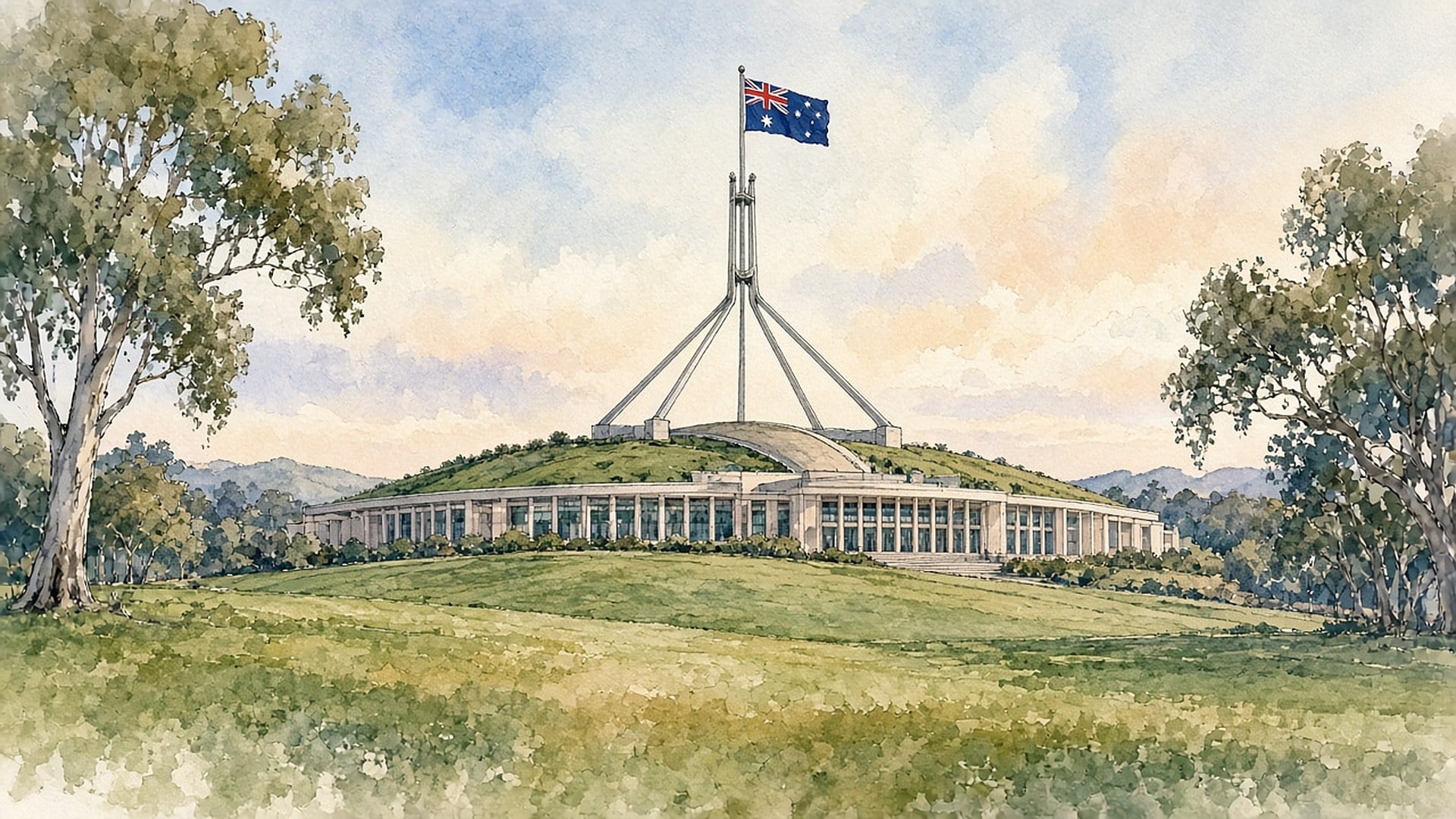
Australia’s Parliament has finished its fastest look yet at artificial intelligence. On November 24, 2026, the Joint Select Committee on Artificial Intelligence tabled its final report, titled Artificial intelligence: The Australian way. In our interest. On our terms. The committee was only appointed on August 20, 2026, received 592 public submissions and wrote to the Prime Minister with preliminary recommendations on October 12. Its final report contains 46 recommendations, from mandatory incident reporting by frontier labs to rules on deepfakes, workplace surveillance and data held in AI systems. None of them are law. But they arrive as the government drafts its AI Standards legislation and as a new Privacy Act duty on automated decisions starts on December 10, 2026, so organisations using AI in Australia should read them as a guide to what is coming.
TL;DR
- The Joint Select Committee on Artificial Intelligence tabled its final report on November 24, 2026, with 46 recommendations and a dissenting report from Senator David Pocock.
- Recommendations 4, 5 and 7 call for frontier labs to report incidents, accept independent evaluators embedded in their operations and give early model access to the Australian Signals Directorate and the AI Safety Institute.
- Committee recommendations are not binding, but from December 10, 2026 the Privacy Act already requires privacy policies to describe certain automated decisions that use personal information.
What the committee concluded
The committee, chaired by Jo Briskey MP, describes AI as a technology that has already changed much of Australian work, culture and the economy. In its introduction it says the effects of AI “are unfolding constantly, and at a rate that requires government to be informed, prepared and able to respond at pace and adequately to momentous and rapid change.” It proposes that its own work continue through a permanent Parliamentary Joint Standing Committee on AI (Recommendation 1) and calls for at least a ten-fold increase in funding for the Australian AI Safety Institute, although it does not name a figure (Recommendation 2).
The report builds on the government’s November 10, 2026 announcement of mandatory AI safety and security protections and a new AI safety regulator. The committee says many of its preliminary recommendations were considered in that announcement, and it asks that its safety recommendations feed into the drafting of the AI Standards legislation, which the report says is expected in Parliament in early 2027. The full list of recommendations is on the Parliament website.
The frontier safety recommendations, stated precisely
Early summaries of the report described some recommendations loosely. Here is what the committee actually proposed:
- Risk-based standards (Recommendation 3). A proportionate framework for developing and deploying AI, covering model evaluation, safety testing, cybersecurity, transparency, accountability, human oversight and ongoing monitoring, with a compliance and penalties mechanism.
- Incident reporting (Recommendation 4). Frontier labs would have a duty to monitor risks and report incidents to the government within clear deadlines. The committee wants a reporting framework developed “as a matter of urgency”.
- Independent evaluation (Recommendation 5). Mandated independent evaluation and auditing of frontier labs operating in Australia. This is not a standalone evaluation network. The committee proposes qualified, and over time accredited, individuals embedded in frontier labs with “employee-like access” who report to government. For training done offshore, it suggests the same goal could be met through the international network of AI safety institutes.
- Limited use protections (Recommendation 6). The existing protections in the Intelligence Services Act 2001 and the Cyber Security Act 2024 should be expanded so that information a company is required to give government authorities about possible unauthorised activity cannot be used by regulators to penalise it. Regulators could still investigate and penalise on their own evidence.
- Early model access (Recommendation 7). Early access to new models for both the Australian Signals Directorate and the AI Safety Institute, as a condition of any arrangement that lets frontier labs train models in Australia.
- Protecting government data (Recommendation 8). Use the Protective Security Policy Framework stocktake direction (PSPF 002-2026) to make sure safeguards protect critical, sensitive and national security information. This is aimed at Commonwealth systems, not a general review of private sector data.
- Interoperability (Recommendation 9). Standards, incident reporting and early access rules should line up with international standards where appropriate.
These obligations would fall mainly on frontier developers. The same shape is appearing elsewhere: California’s SB 53 framework also relies on incident reports and published safety frameworks. Organisations that only buy or deploy AI will feel the effects mostly through vendor contracts and disclosure.
The recommendations that reach deployers
Several recommendations apply to ordinary businesses, not just to the labs:
- Accountability for AI agents (Recommendation 22). Where agents do tasks that a person or company would otherwise be responsible for, the law should be able to hold that person or company accountable. In practice, “the AI did it” would not be a defence.
- Data in AI systems (Recommendation 26). Existing rules on storing, processing, accessing and protecting data should be fit for AI, including safeguards on jurisdiction, cross-border transfers, foreign access and privacy.
- Workplace monitoring (Recommendation 21). Continued examination of AI-enabled monitoring, surveillance and automated decision-making at work, including its privacy effects.
- Synthetic media (Recommendations 17 to 19). A review of banning deepfakes in political material, consideration of mandatory machine-readable labels on AI-generated or materially altered images, video and voice, and possible rights over a person’s face, voice and likeness.
- Children and sensitive advice (Recommendations 23 and 24). More settings to address children’s use of AI chatbots and AI-generated intimate imagery, and a look at chatbots used for mental health, legal and financial advice.
- Critical infrastructure (Recommendation 15). Making sure the Security of Critical Infrastructure framework covers critical AI infrastructure.
Where the Privacy Act already applies
Organisations do not need to wait for AI legislation to have AI duties in Australia. Under the Privacy and Other Legislation Amendment Act 2024, new transparency rules in APP 1 start on December 10, 2026. The OAIC’s guidance explains that if an entity uses a computer program to make a decision, or to do something substantially and directly related to making it, and the decision could reasonably be expected to significantly affect a person’s rights or interests, its privacy policy must describe the kinds of personal information used and the kinds of decisions involved. That covers AI scoring and recommendation tools that feed human decisions, not only fully automated ones. Our guide to privacy policy requirements in Australia covers the rest of what a policy must contain.
The other Australian Privacy Principles also apply to AI: collection must be reasonably necessary, use is limited to the primary purpose or a permitted secondary purpose, and APP 8 makes an entity accountable for personal information it discloses overseas. Existing law has limits, as the OAIC’s fastproperty.ai investigation showed, but regulators already have powers and the penalties for serious interferences with privacy are significant.
Bigger changes are pending. The Attorney-General’s Department released an exposure draft of the Privacy Amendment (Personal Data Protection) Bill 2026, with submissions due by September 18, 2026. The department says the bill “remains subject to further consideration by government.” It is not law, and its final form is unknown.
Five steps for organisations deploying AI in Australia
- Find your automated decisions before December 10. List every program that makes or substantially informs significant decisions using personal information, then update the privacy policy to describe them.
- Assign accountability for agents. Name an owner for each AI agent, limit its permissions and keep logs. Recommendation 22 points to a future where the deploying company answers for what its agents do.
- Ask your model vendors about incidents and evaluations. Contracts should require prompt notice of serious incidents and disclosure of safety testing, since frontier labs may soon have to report to the government.
- Map where AI data goes. Recommendation 26 and APP 8 both focus on cross-border data and foreign access. Know which jurisdictions host prompts, outputs and training data.
- Prepare for labelling. If you publish AI-generated images, audio or video, test machine-readable labelling now. It is a consideration in this report, not yet a rule.
Frequently asked questions
Does the report create any new legal obligations?
No. It is a parliamentary committee report. The government will decide which recommendations to accept, and any new duties would need legislation or regulation.
Was the committee unanimous?
No. Senator David Pocock submitted a dissenting report, citing the need for a more cautious approach, stronger copyright protection and concern about the impact of data centres. Labor and Coalition members and Kate Chaney MP added comments.
Will independent evaluators sit inside AI companies?
That is what Recommendation 5 proposes for frontier labs operating in Australia. It would not apply to businesses that only use AI tools.
What happens on December 10, 2026?
The APP 1 automated decision-making transparency requirements start, so privacy policies must cover programs that make or substantially inform significant decisions using personal information.
Read the report as a forecast
The committee’s message is that Australia wants AI on its own terms, and its recommendations show what those terms will probably look like: incidents reported, models tested by independent evaluators, data kept under clear jurisdiction and someone accountable for every agent. Organisations that get their automated decision disclosures right this month will already have done much of the groundwork for whatever Canberra legislates next.
Put this into practice
Turn privacy guidance into working controls.
Captain Compliance helps teams discover tracking technologies, enforce consent, manage privacy requests and document the evidence behind every decision.