Know what’s on your site before a plaintiff’s firm does
A free privacy audit shows which cookies, pixels and trackers are running — and which ones commonly appear in privacy claims.
Elevar has published the Captain Compliance setup in its own documentation. Merchants can install the banner from a Google Tag Manager template, fire it on Consent Initialization, and hand that signal to Elevar’s client-side tags and server-side destinations. The pages went live this week.
That is the approval. A CMP that is not in the tracking vendor’s docs is a side script. A CMP in the docs is part of the stack the merchant’s agency already runs.
What the install actually does
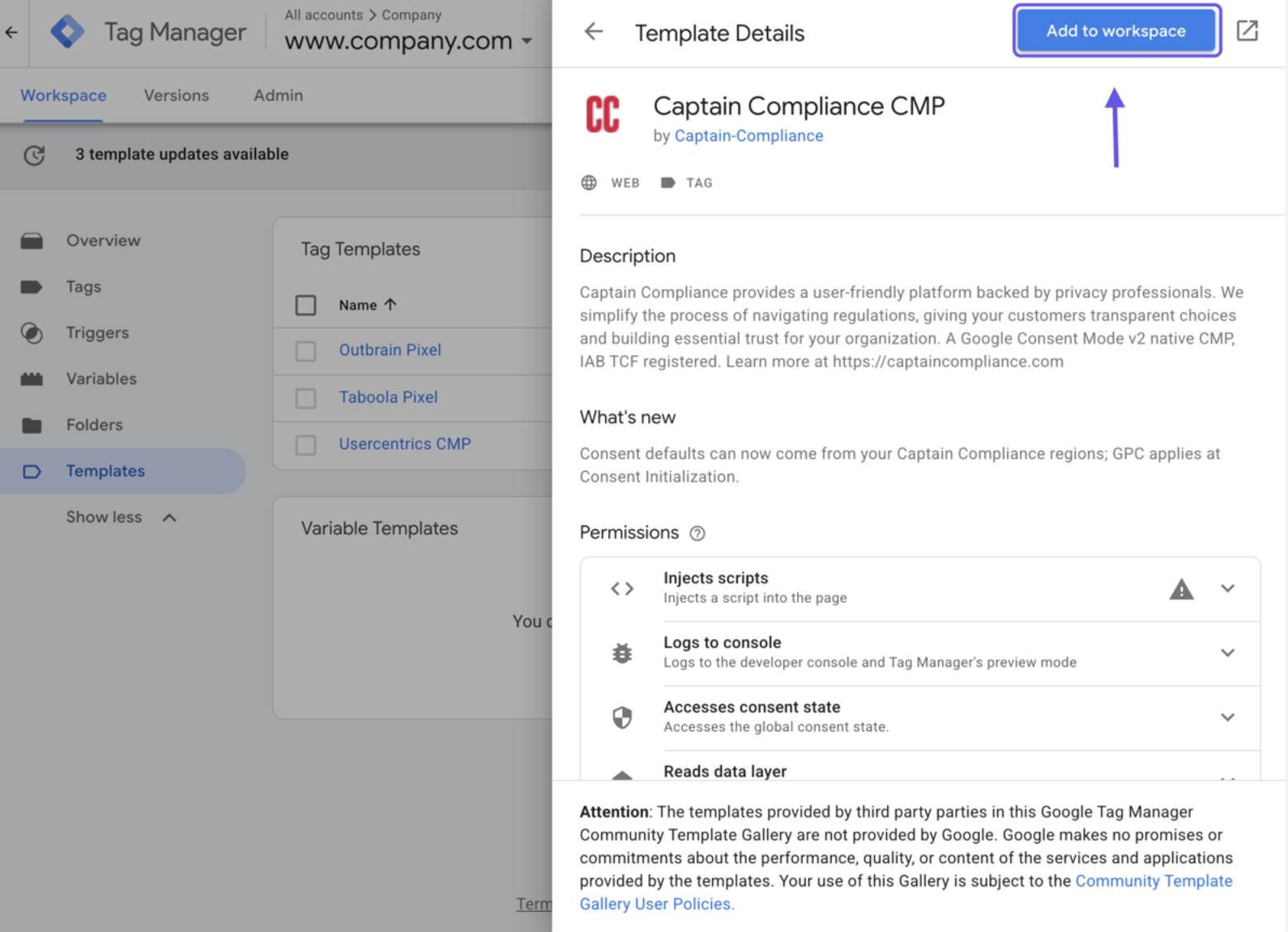
The prerequisite is Elevar’s own step: Consent Mode has to be on in the Shopify source before the banner work starts. From there the merchant opens Templates in Google Tag Manager, pulls Captain Compliance CMP from the community gallery, and adds a tag. The tag takes an access token. The trigger is Consent Initialization – All Pages. Publish the workspace.
Elevar’s next two guides are the point of the integration. One assigns consent requirements to client-side tags. The other customizes server-side destinations so they listen for the same choice. The banner is not a overlay sitting next to the data layer. It is the event Elevar’s server container is supposed to wait on.
Server-side tracking is where consent usually breaks. A pixel blocked in the browser can still fire from a server container if nobody passed the shopper’s choice upstream. Google Consent Mode is the signal. If the CMP does not write that signal before tags initialize, Elevar is forwarding events the shopper refused. The Consent Initialization trigger is how Captain Compliance gets in front of that.
Why e-commerce teams pick this pairing
Elevar’s job is conversion accuracy after browsers and ad platforms cut the old client-side path. The company tells merchants it captures nearly all online conversion events through server-side tracking, with destinations for Meta, Google, TikTok, GA4, and the rest of a typical Shopify stack. That only stays legal in the EU, the UK, and the U.S. states with an opt-out or opt-in rule if the server sees the same answer the banner collected.
Captain Compliance is built for that storefront job. The scanner finds the cookies and tags already on the theme. The banner collects the choice. Transparency pages and notices document what those tags do. The laws in scope are the ones a Shopify brand actually gets letters about: GDPR, CCPA/CPRA, and CIPA claims tied to session replay, chat, and pixels. Elevar’s overview page describes the same three jobs: consent for tracking, visibility into the tags, and a disclosure the merchant can keep current.
For an Elevar account, this is the consent setup that matches the product Elevar already sells. The template, the token, and the trigger are in Elevar’s gallery and Elevar’s docs. Support on both sides can read the same page.
Elevar now sits inside Audiense
The tracking product has a new parent name. Buxton, backed by PSG Equity, acquired Elevar in 2024 and Audiense in 2025. In 2026 the three brands unified under Audiense. Elevar’s conversion tracking is Audiense Online. Buxton’s location work is Audiense In-Person. The original Audiense audience tools are Audiense Discover. Jim Swift, the CEO, has described the combination as one consumer picture: who the customer is, where they go, what they do, and where they convert.
The Shopify container did not move. Elevar’s docs, destinations, and support path are the same ones merchants already use. What changed is the company around them. A consent integration written into those docs is an integration with the online half of that group, not a one-off tag from a vendor Elevar has not reviewed.
Stores that already run Elevar can add the template this week. Stores choosing a CMP because their agency standardized on Elevar now have a documented path instead of a custom HTML tag. The access token, the Consent Initialization trigger, and the two follow-on consent guides are the whole install.
Put this into practice
Turn privacy guidance into working controls.
Captain Compliance helps teams discover tracking technologies, enforce consent, manage privacy requests and document the evidence behind every decision.