We Help You Get Your Swigart Lawsuit Dismissed and Get Your Website Compliant Within 24 Hours – BOOK A DEMO BELOW
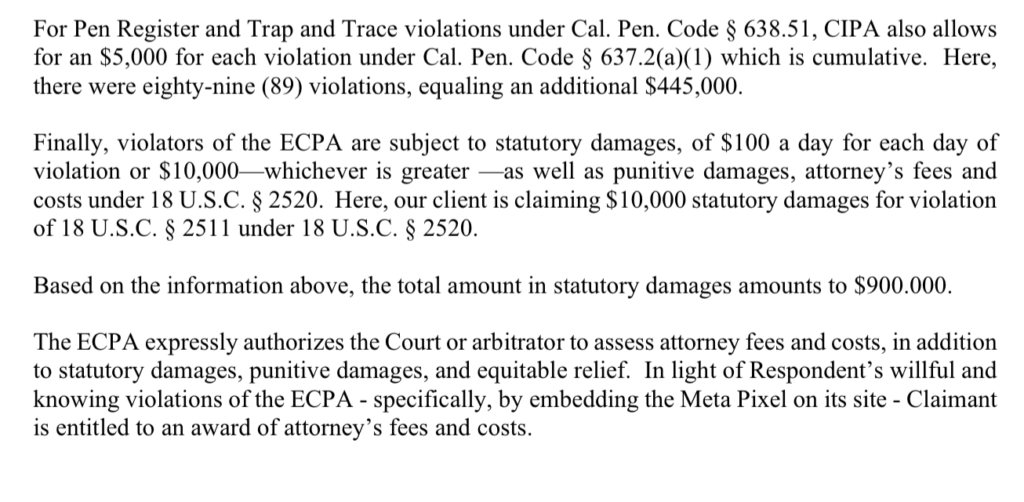
Swigart is now increasing their demands up to $900,000 for privacy violations as you can confirm below. We help protect businesses from these claims and know how to get these cases dismissed.
Swigart Law Group, based in California, is a legal firm with a strong focus on consumer protection and privacy law but is also being talked about in forums because of their tactics in forcing arbitration to receive a settlement as a result of a CIPA violation. If you’ve received a notice and want to get your website compliant than please connect with a Captain Compliance team member for a free website and privacy audit by using the book with an expert link below. If you’ve contacted your cyber insurance carrier or insurance company regarding the violation notice please reach out to us right away so we can help get this resolved for you and not make your premiums go up as a result of this demand letter/privacy lawsuit claim you’ve received.

That’s a very active area of litigation for the Swigart Law Group.
Swigart Law Group’s Meta Pixel Lawsuits
The core of the Swigart Law Group’s lawsuits involving the Meta Pixel (a piece of code website owners use to track user actions and send data to Meta/Facebook) revolves around the California Invasion of Privacy Act (CIPA), often combined with other privacy laws like the Video Privacy Protection Act (VPPA).
-
The Allegation: Digital Wiretapping (CIPA): The firm’s main argument is that the Meta Pixel functions as a form of digital wiretapping or an illegal “pen register/trap and trace” device. They allege that when a consumer visits a website, the Pixel surreptitiously intercepts the user’s private interactions (like button clicks, form submissions, or specific pages viewed) and shares this communication with a third party (Meta Platforms) without the user’s explicit, all-party consent. Because California is an “all-party consent” state for communication recording, this alleged “eavesdropping” violates CIPA.
-
Targeting Sensitive Data: A major focus has been on websites that handle sensitive information, such as healthcare providers or mental health apps. Lawsuits argue that patients seeking information on specific conditions have their sensitive health data collected by the Pixel and shared with Meta’s ad algorithms, a severe breach of privacy.
-
VPPA Claims: For websites that stream video content (like news sites or e-commerce platforms), the firm also pursues claims under the VPPA. This federal law prohibits the unauthorized disclosure of personally identifiable information connected to a consumer’s video-viewing choices. The lawsuits allege that the Pixel links a user’s Facebook ID to the videos they watch on a third-party site, violating this act.
The Swigart Law Group is known for aggressively sending demand letters and initiating arbitration proceedings against companies using these tracking technologies, often seeking statutory damages that can be substantial.
One of the firm’s key areas of activity involves enforcing the California Invasion of Privacy Act (CIPA), a state law designed to protect the privacy of individuals during communications. CIPA prohibits the unauthorized recording or monitoring of conversations without the consent of all involved parties and this is being extended into the Facebook Meta Pixel and other cookie tracking technologies that are used on your website.
What is the California Invasion of Privacy Act (CIPA)?
CIPA, codified in California Penal Code § 630-638, aims to safeguard individuals against eavesdropping and recording of their communications. The key provisions of CIPA include:
- Two-Party Consent Requirement: All parties to a conversation must give consent before it can be recorded or monitored.
- Prohibition of Unauthorized Devices: Use of devices to intercept or record private communications without consent is strictly prohibited.
- Penalties for Non-Compliance: Violators can face statutory damages of $5,000 per violation or three times the amount of actual damages, whichever is greater.
Swigart Law Group’s Approach

Swigart Law Group has gained attention for sending demand letters, initiating arbitration claims, and filing lawsuits on behalf of consumers who allege their rights under CIPA have been violated. Their legal strategy often targets businesses that use cookie and pixel tracking technologies for tracking or recording customer interactions on a website without their permission.

Common Allegations in CIPA Cases
- Website Session Recordings: Many businesses use tools like session replay software to record user activity on their websites. Swigart Law Group claims this technology violates CIPA when users are not explicitly informed and consent is not obtained. Think of software like trusted form TCPA compliance or Hotjar.
- Call Recording: Companies that record customer service calls without clearly notifying both parties of the recording are also a primary target for CIPA complaints.
- Chatbots and Pixels: Interactive features like chatbots and third-party tracking pixels embedded in websites can also trigger privacy concerns under CIPA.
Arbitration Settlements and Legal Actions
Swigart Law Group often resolves these claims through arbitration, avoiding lengthy and costly court battles. Arbitration settlements allow businesses to address complaints more efficiently while providing compensation to affected parties.
Why Arbitration?
- Lower Costs: Arbitration generally incurs fewer expenses compared to litigation.
- Confidentiality: Arbitration proceedings are private, avoiding public exposure of the complaint.
- Faster Resolution: Arbitration is typically faster than court litigation.
Settlement Outcomes
The goal of arbitration or litigation in CIPA cases is typically to:
- Secure statutory damages or a negotiated settlement for the consumer.
- Prompt businesses to revise their privacy practices, such as implementing more transparent consent mechanisms.
Implications for Businesses
Companies receiving a CIPA complaint or demand letter should take these allegations seriously due to the significant financial and reputational risks associated with non-compliance. Businesses operating in California—or interacting with California residents which can mean that your website is just accessible to California visitors—should evaluate their data collection and communication practices to ensure compliance and reach out to a team member here if they want help securing and protecting their business from a potential Swigart Lawsuit claim.
Steps to Mitigate Risks
- Review Privacy Policies: Ensure your privacy policy clearly discloses any recording, tracking, or monitoring practices and use our adaptive privacy policy software.
- Implement Consent Mechanisms: Obtain explicit consent before recording calls or user interactions.
- Audit Tracking Technologies: Regularly audit session replay tools, chatbots, and tracking pixels for compliance with CIPA requirements.
- Employee Training: Train employees on the importance of obtaining and documenting consent.
Legal Guidance and Defense
If you have received a CIPA complaint from Swigart Law Group, consulting a legal expert is critical to defend the case while we help to fix your compliance gaps. Experienced counsel can help:
- Assess the validity of the claims.
- Determine whether the technology or practices in question violate CIPA.
- Negotiate settlements or prepare defenses, if necessary.
Swigart Law Group Class Action Lawsuit Outcomes and Settlements
The majority of outcomes for the companies targeted by Swigart Law Group (and similar firms) are currently falling into three categories:
1. Pre-Litigation Settlements (The Most Common before Arbitration)
-
The “Shakedown” Model: Swigart Law Group often resolves CIPA and VPPA claims through mass arbitration demands or pre-lawsuit demand letters. Businesses often settle these individual claims quickly to avoid the high cost of litigation, especially given CIPA’s $5,000 statutory damages per violation.
-
Settlement Amounts: Unofficial reports suggest that many businesses pay at least $10,000 but we’ve heard hundreds of thousands of dollars per individual claim to settle and make the issue disappear, which is often cheaper than the legal fees for a drawn-out defense. This strategy is leveraged by the Swigart Law Group to force a rapid settlement.
-
The Risk of Paying: When a business settles one of these claims, it signals that it is a “payer,” often leading to subsequent claims being filed by the same plaintiff or firm regarding other tracking on the website.
2. Judicial Rulings (Mixed but Important)
-
Surviving Motion to Dismiss: In cases alleging the interception of highly sensitive data (e.g., patient health information from hospital websites), courts have frequently denied motions to dismiss and allowed the cases to move forward into discovery. This forces companies like Meta to preserve and hand over data, increasing their legal exposure.
-
Dismissal for Lack of Injury (Tester Plaintiffs): This is a key win for defendants. A growing number of courts are dismissing cases brought by “tester” plaintiffs—individuals who admit they visited a website specifically to create a CIPA violation and file a lawsuit. Judges are finding that these plaintiffs, who actively sought out the violation, lack the necessary concrete injury to have legal standing in federal court.
-
VPPA Claims: The outcomes are mixed. Some courts have dismissed VPPA claims because the information transmitted (like a Facebook ID and the name of the webpage) was deemed insufficient to constitute “personally identifiable information” under the specific language of the statute. Other courts have allowed these claims to proceed.
Key Business Defenses
Businesses are mounting aggressive defenses rooted in both constitutional and contractual law:
1. Challenge to Plaintiff Standing
-
The “Tester” Defense: The most effective defense right now is arguing that the plaintiff lacks Article III standing (the legal right to sue) because they suffered no genuine, concrete injury. Defense lawyers argue the plaintiff was a “litigation entrepreneur,” not a genuine victim, which some courts are now agreeing with.
-
No “Content” Intercepted: Defense attorneys often argue that the Meta Pixel only collects generic routing and addressing information (like a URL or an IP address) and not the contents of the communication, which they argue is a necessary element for a CIPA wiretapping claim.
2. Contractual Defenses (Consent and Arbitration)
-
Arbitration Clauses: Many companies are successfully enforcing mandatory, binding arbitration clauses found in their website’s Terms of Use. This forces the plaintiff to pursue the case individually in private arbitration, destroying the viability of a high-value class action lawsuit. Swigart Law Group has responded by filing mass individual arbitrations to overwhelm the defendant with fees.
-
Implied or Explicit Consent: Businesses argue that by using the website after being presented with a conspicuous cookie banner or link to a privacy policy that explicitly discloses third-party tracking, the user has given consent, thus negating the “without consent” element of the CIPA claim.
3. Statutory Interpretation
-
Party Exception: A common defense is the “party exception,” which holds that a party to a communication cannot wiretap themselves. Since the website owner is a party to the communication with the user, the defense argues that having the Pixel collect data is akin to the website owner recording its own side of the conversation, which is legal. While some courts have rejected this in the third-party context, it remains a primary argument.
The legal landscape is evolving rapidly, with the ultimate liability often depending on the specific wording of the website’s legal terms and the nature of the data collected.
Would you like to explore the specific actions businesses are taking now to change their websites and avoid these lawsuits?
Swigart Law Group Reviews
These demand notices that are being sent out for California arbitration through JAMS require you to retain a California attorney (we have a list of privacy attorneys if you need contacts) and if you are an out of state attorney you will need a lawyer in California to sponsor you. While you may think a law firm who is a consumer protection agency may have a lot of bad and negative 1 star reviews but the Google review for Swigart Law Group, APC are actually quite positive with 73 reviews and a near 5 star rating for their legal practice (see image below). 
What To Do If I received a Swigart CIPA Claim?
Swigart Law Group’s enforcement of CIPA highlights the growing importance of privacy laws in the digital age. Businesses must proactively address potential compliance issues to minimize their exposure to lawsuits and demand letters. Regular audits, transparent practices, and robust consent mechanisms are essential components of a comprehensive privacy compliance strategy.
Most likely if you’re dealing with arbitration through JAMS ADR you are going to be communicating with one of the following attorneys:
josh@swigartlawgroup.com spencer@swigartlawgroup.com noah@swigartlawgroup.com angelique@swigartlawgroup.com
2025 Swigart Lawsuit Notice?
The lawsuits are only getting more and more common. Now there are 6 law firms in California that are pursuing these claims with Pacific Trial Attorneys being another one that is aggressively litigating. If you have a video player on your site VPPA claims are going to be served up as well. So if you want to know what this year entails the answer is more creative suits and arbitration claims.