From utility bills to kids’ online safety, the new governor wastes no time delivering on campaign promises.
Mikie Sherrill didn’t wait around. On her very first day as New Jersey’s governor, she signed six executive orders—two right after her swearing-in ceremony in Newark and four more at the State House in Trenton. It was a clear signal: this administration is moving fast on costs, kids’ safety, and making government work better.
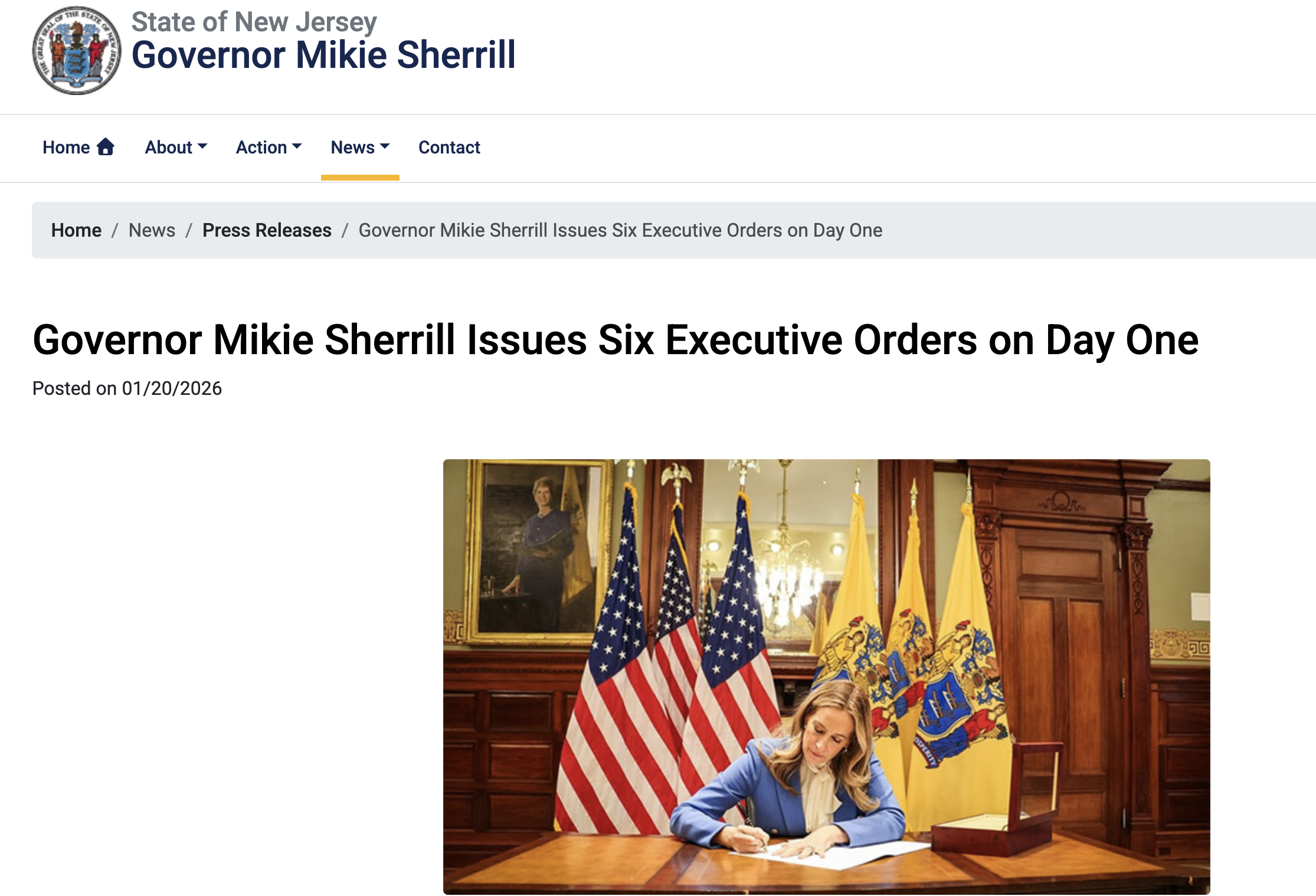
Sherrill, the former Navy helicopter pilot and congresswoman who flipped the governorship, leaned on her military background in her remarks. “In the Navy, I learned that you have to lead, follow, or get out of the way,” she said. “I promised the people of New Jersey that I would be on a mission to deliver starting Day One.”
The orders tackle some of the biggest complaints voters had: sky-high utility bills, red tape slowing down business, kids struggling with social media, and a sense that Trenton isn’t always accountable. Sherrill framed it as getting to work for regular families—lowering costs, protecting children, and cleaning up government.
Taking On Utility Costs Head-On
The first two orders went straight at energy prices, which have been a pain point for years in New Jersey.
Executive Order No. 1 uses state authority to push back against upcoming rate hikes blamed partly on the regional grid operator PJM. It taps existing funds to offset electricity bill increases set for June, gives the Board of Public Utilities more power to pause or tweak utility moves that could drive bills higher, and orders a review of how utilities operate to make sure they’re focused on keeping costs down for customers.
Then came Executive Order No. 2, declaring a formal State of Emergency on energy under the Disaster Control Act. The goal is simple: build a lot more power generation fast, because more supply means lower prices—especially with federal support drying up.
It kicks off expedited programs for thousands of megawatts of new solar and battery storage. Agencies have to find ways to speed up permits, and the BPU gets directed to tackle delays in connecting projects to the grid. There’s even a requirement for utilities to report on power demands from data centers—the so-called “ghost loads” from AI servers that are quietly driving up usage.
On top of that, it sets up a Nuclear Power Task Force to explore new nuclear plants, positioning New Jersey to get ahead on what could be a big part of future clean energy.
Sherrill called these moves essential. With families already stretched thin, she wasn’t willing to wait for rate relief.
Setting High Standards for Ethics and Efficiency
The next two orders turned inward, aiming to make state government more trustworthy and effective.
Executive Order No. 3 lays out strict ethical rules for everyone in the administration. It keeps requirements for financial disclosures, blind trusts where needed, and transparency about business interests. The Governor and Lieutenant Governor stay under the same Code of Conduct as before. It’s about building a culture where people trust that decisions are made for the public, not personal gain.
Executive Order No. 4 creates something new: an Office of the Chief Operating Officer right in the Governor’s office. Sherrill had already named Kellie Doucette as the state’s first COO—a role meant to drive efficiency across agencies.
The order spells out what the COO does: advise on big initiatives, improve how government runs day-to-day, streamline permitting, and boost customer service for residents dealing with state bureaucracy. It sets up subunits like an Office of Strategic Initiatives for economic priorities and an Operational Performance Office to fix slow processes.
Every agency has to name a liaison to work with the COO’s team. It’s a clear push to break down silos and get things done faster.
Cutting Red Tape and Boosting Transparency
Executive Order No. 5 builds on Sherrill’s “Save You Time and Money” agenda. It’s all about making it easier and cheaper to get things done in New Jersey—whether that’s building a business, developing housing, or starting a project.
It creates a Cross-Agency Permitting Team under the COO to overhaul the state’s permitting mess. Agencies have to list every permit they issue, and the team will build a public dashboard showing application status and set “shot clocks”—firm timelines—to cut delays.
There’s also a Regulatory Simplification Team to scrub rules that add unnecessary costs or hold things up.
And in a nod to openness, it launches the New Jersey Report Card—an online portal where anyone can see how state programs are performing and dig into budget details with interactive tools. Taxpayers get a clearer picture of what their money is actually delivering.
Putting Kids’ Online Safety First
The final order, No. 6, focuses on children—a topic Sherrill hammered during the campaign amid rising concerns about social media’s impact on mental health.
It sets up a new Office of Youth Online Mental Health Safety and Awareness in the Department of Health. This office will coordinate across agencies, talk regularly to kids, parents, teachers, and experts, and come up with policy ideas to keep children safer online.
All relevant agencies have to review their rules and prioritize mental health outcomes when dealing with tech platforms. The COO gets tasked with pulling everyone together on this.
Sherrill also reiterated plans for a higher education research center dedicated to online safety and youth mental health—bringing academics into the fight.
Parents have been vocal about algorithms pushing harmful content, addictive designs, and cyberbullying. This order signals the state is stepping in where federal action has stalled.
What It All Adds Up To
Taken together, these six orders paint a picture of an administration that’s practical and action-oriented. Sherrill isn’t waiting for the legislature on everything—she’s using the governor’s tools to move now on promises that resonated with voters: lower bills, less bureaucracy, honest government, and protecting the next generation.
Reaction was quick. Business groups praised the permitting and regulatory fixes as long overdue. Environmental advocates liked the push for solar, batteries, and nuclear exploration, though some wanted stronger clean-energy mandates. Parent organizations welcomed the kids’ safety focus.
Critics—mostly from the outgoing administration’s allies—called it overreach, especially the utility emergency declaration. But Sherrill’s team pushed back, saying families can’t wait while rates keep climbing.
Implementation will be the real test. Freezing hikes and speeding permits sounds good on paper, but agencies have to deliver. The COO role could help keep momentum.
A Strong Start in Trenton
Day One set a tone: this governor means business. From Newark to Trenton, Sherrill showed she’s ready to use every lever available to tackle New Jersey’s challenges head-on.
Residents watching utility bills, waiting on permits, worried about their kids’ screen time, or just frustrated with government inefficiency now have concrete steps underway. Whether they all pan out remains to be seen, but the message is clear—Sherrill isn’t easing into the job.
As she put it: “Let’s get to work.”
If you operate in New Jersey and want to be compliant with the New Jersey Data Privacy Law reach out to one of our privacy experts today for a free privacy audit.
