There is a familiar pattern in how organizations think about their privacy programs and their trust centers. The privacy program gets built by the legal and compliance team. The trust center gets built by marketing and security. The two occasionally meet in a hallway, nod at each other, and return to their respective corners. The trust center ends up showcasing SOC 2 badges and ISO 27001 certificates in abundance, while the privacy documentation — the stuff that customers, prospects, regulators, and enterprise procurement teams increasingly care most about — gets tucked into a footer link labeled “Privacy Policy” and largely left alone.
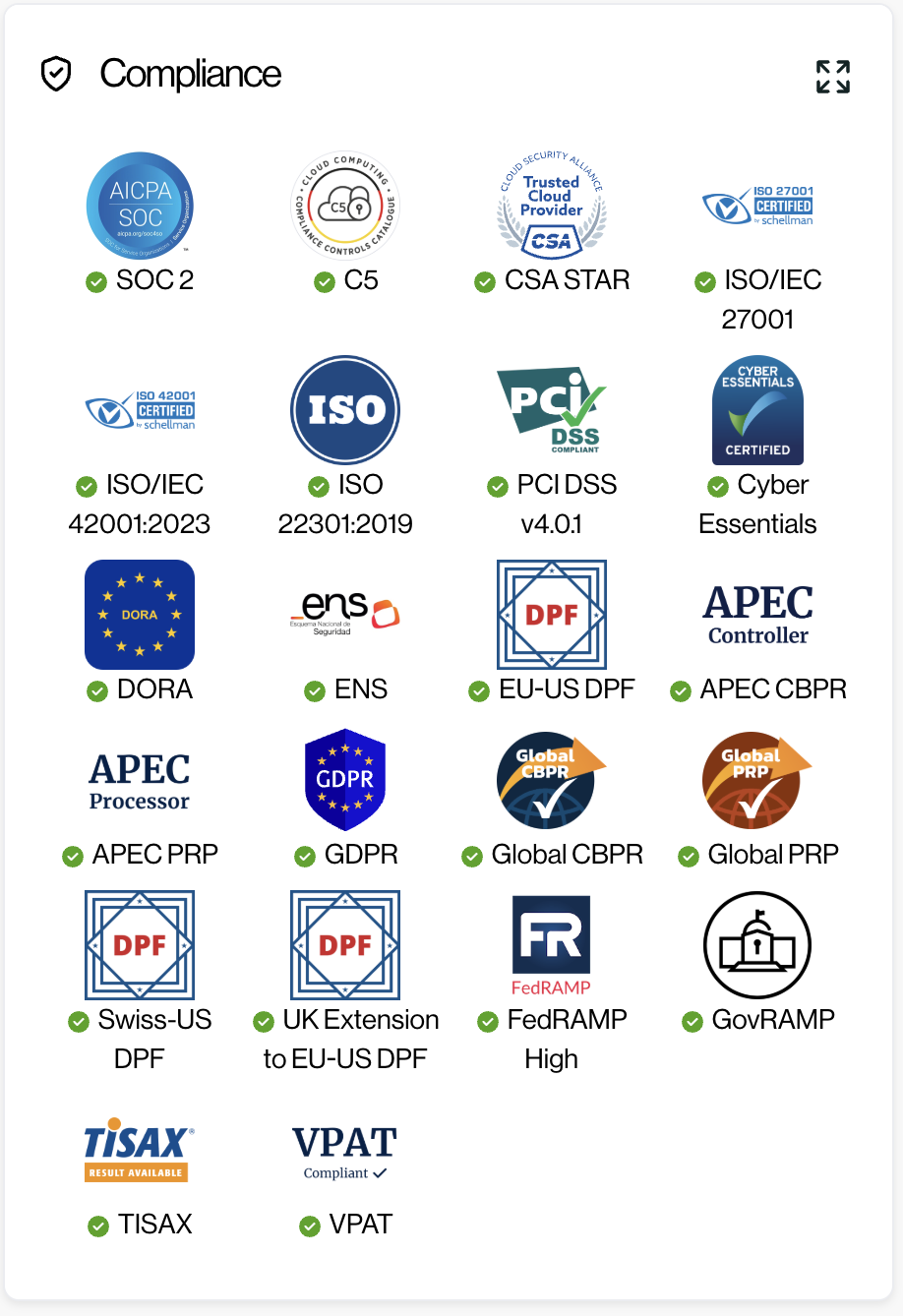
That approach is no longer fit for purpose. Trust is earned through action: transparent policies, secure systems, and a commitment to making improvements. For large organizations and enterprises that use a trust center whether its a home made trust center or platform integration with Drata, Safebase, or Vanta it’s important that you integrate privacy in a thoughtful manner. These organizations that handle personal data at any meaningful scale. The trust center is the most visible external expression of how seriously the company takes security and privacy in one central location. Getting it right is not a cosmetic exercise. It is a strategic and increasingly commercial imperative.
This article is a practitioner’s guide to integrating data privacy practices into your trust center — not just what to include, but how to structure it, maintain it, and make it work as a genuine compliance and commercial asset rather than a document repository that nobody visits.
What a Trust Center Is — And What It Should Be
A trust center is a digital portal that provides visibility into your organization’s security controls, certifications, and key compliance documents. It’s designed to build trust by giving customers a straightforward way to verify your security measures without having to chase down the details. The concept is simple: aggregate all the essential information that typically clogs up your sales or security teams’ time and make it easily accessible to the people who need it.
The security-centric framing of that definition is typical — and it’s where most trust centers stop. A genuinely mature trust center goes further, treating privacy as a first-class pillar alongside security and compliance. The distinction matters because security and privacy, while deeply interrelated, address different questions. Security asks: how do you protect data from unauthorized access? Privacy asks: what data do you collect, from whom, for what purpose, how long do you keep it, who do you share it with, and what rights do individuals have over it? Enterprise customers, sophisticated procurement teams, and regulators care about both sets of answers, and a trust center that answers only the first set is leaving a significant credibility gap.
The purpose of a trust center is to provide a centralized platform where organizations can transparently showcase their security and compliance efforts. It allows customers, prospects, and stakeholders to easily access critical information about the organization’s security measures, certifications, and privacy practices, helping to build trust and streamline security assessments. The privacy piece of that — the practices, not just the policy — is what most trust centers currently underdeliver on, and it is the primary opportunity for differentiation.
Why Privacy Has Become the Central Trust Center Conversation
The commercial pressure to get this right has accelerated dramatically. Nearly half of companies (43%) said a lack of compliance certification delayed their sales cycles, and 61% said they achieved compliance specifically to accelerate revenue. Enterprise procurement processes now routinely include data protection questionnaires, vendor risk assessments, and requests for Data Processing Agreements as standard components of onboarding. In 2026, more companies will require suppliers to meet strict privacy and AI governance standards, complete detailed questionnaires, and provide proof of compliance certifications to minimize data exposure and risk.
A trust center that proactively surfaces answers to the privacy questions that procurement teams ask repeatedly — what personal data do you collect, where is it stored, who has access to it, how long is it retained, what is your incident response process, what rights do data subjects have — compresses sales cycles, reduces the burden on security and legal teams, and signals to prospective customers that privacy governance is operationally mature rather than aspirationally documented.
Customers want transparency about how their data is used, how models make decisions, and how organizations prevent misuse. Companies that can articulate responsible data practices earn deeper trust and avoid regulatory headaches. The trust center is the most scalable way to articulate those practices. Done well, it converts what is currently a reactive, resource-intensive process — answering the same questionnaire for the forty-seventh enterprise prospect — into a self-service resource that demonstrates the same credibility at scale.
The Architecture of a Privacy-Integrated Trust Center
Building a trust center that genuinely reflects your privacy program requires thinking about it in layers, each serving a different audience and purpose.
Layer 1: The Privacy Policy — But Actually Readable
Every trust center has a link to the privacy policy. Almost none of them make that policy genuinely accessible. A privacy policy that is written exclusively by lawyers for the purpose of legal defensibility — wall-to-wall dense paragraphs, cross-references to sections that cross-reference other sections, and a total absence of plain language — does not build trust. It signals that the organization views privacy as a legal obligation to be managed rather than a value to be communicated.
The trust center treatment of the privacy policy should include at minimum: a plain-language summary of the most important points, ideally structured around the questions that users actually ask rather than the sequence that satisfies legal requirements; a layered format that allows users to drill down from the summary into the detailed provisions; version history showing when the policy was last updated and what changed; and separate, shorter notices for specific contexts — employee data, job applicant data, cookie policy, California resident notice, data subject rights notice — rather than a single monolithic document that tries to address all audiences simultaneously.
The goal is a privacy policy section of your trust center that a non-lawyer prospect can read and understand in five minutes. If the only people who can parse your privacy documentation are the ones who wrote it, the trust center is failing its primary function.
Layer 2: Data Processing Documentation
This is where most trust centers have the largest gap between what they publish and what procurement teams actually need to see. The documentation that matters for enterprise privacy due diligence includes:
- Data Processing Agreement (DPA): Your standard DPA should be publicly available for download — not gated behind a sales call. Sophisticated buyers will want to review it before engaging with your sales team. A published DPA signals that you have thought through your data processing obligations under GDPR, the CCPA’s service provider requirements, and equivalent frameworks, and that your legal team is not starting from scratch for each customer.
- Record of Processing Activities (RoPA) summary: A high-level summary — not necessarily the full internal RoPA — of the categories of personal data you process, the purposes of processing, legal bases, and retention periods. This is the foundational document for privacy accountability under GDPR Article 30, and a customer-facing version of it demonstrates that your internal governance is mature enough to produce it.
- Sub-processor list: Including data sub-processors in your trust center not only helps meet requirements of data privacy regulations like GDPR — it also enhances transparency and builds trust with customers by clearly outlining which third-party vendors have access to their data. The sub-processor list should be current, searchable, and include the processing purpose and data transfer location for each listed vendor. Under GDPR Article 28, customers have the right to object to new sub-processors, and a published, maintained list with a change notification mechanism satisfies that requirement operationally rather than administratively.
- International data transfer mechanisms: If you transfer personal data outside the EU/EEA or outside jurisdictions with adequacy decisions, your trust center should explain what transfer mechanisms you rely on — Standard Contractual Clauses, adequacy decisions, Binding Corporate Rules — and ideally make the relevant documentation available. Cross-border transfer compliance is one of the most actively enforced areas of GDPR, and proactive transparency here signals that your program is current.
Layer 3: Your Privacy Program Framework
Beyond the legal documentation, a mature trust center explains how your privacy program actually works — not just what your legal obligations are, but the organizational structures, processes, and controls through which you meet them. This layer speaks to the “how” rather than just the “what,” and it is where trust centers most reliably differentiate between organizations with performative privacy programs and those with genuine operational maturity.
The elements of this layer include:
- Privacy by Design methodology: A description of how privacy considerations are embedded into product development, procurement, and business process changes. Specifically: when are Privacy Impact Assessments or Data Protection Impact Assessments conducted? Who is responsible for completing them? What is the governance process for reviewing and approving new processing activities?
- Data minimization and purpose limitation controls: How does your organization ensure that data collected for one purpose is not used for another? What technical and organizational controls enforce this? The answer here matters enormously to enterprise customers who are entrusting you with their customers’ data — they need confidence that data collected in the context of your service does not migrate into advertising profiles, model training datasets, or other secondary uses without appropriate authorization.
- Retention and deletion practices: A clear, published statement of how long you retain different categories of personal data and how you ensure deletion at the end of the retention period. This should be specific enough to be meaningful — “we retain usage data for 24 months” is more useful than “we retain data as long as necessary for our legitimate business purposes” — and it should extend to your backup and archival systems, not just active production databases.
- Access controls and internal governance: How do you control which employees and systems have access to personal data? What approval processes govern access to sensitive data categories? This demonstrates that your privacy program extends into your internal data governance rather than being exclusively outward-facing.
Layer 4: Data Subject Rights Infrastructure
Your trust center should be the primary mechanism through which individuals exercise their data subject rights — and it should make that process genuinely accessible, not technically compliant but practically impenetrable.
By aligning these with frequently asked questions related to data protection, privacy, and security policies and procedures during procurement, onboarding, renewal, or another stage of the customer lifecycle, you can save your team from answering the same questions over and over and proactively address any objections or concerns.
The rights infrastructure component of your trust center should include:
- A clear, jargon-free explanation of what rights individuals have under applicable laws — GDPR’s access, rectification, erasure, portability, restriction, and objection rights; the CCPA’s right to know, delete, correct, and opt out of sale or sharing; and equivalent rights under other applicable frameworks.
- A working, accessible rights request intake mechanism — not just an email address buried in the privacy policy. A webform that captures the information needed to process a request, confirms receipt automatically, and feeds into a documented request-handling workflow is the baseline. The form should work on mobile, should not require account creation, and should be accessible to users with disabilities.
- Clear communication of response timelines — 30 days for GDPR, 45 days (extendable) for the CCPA — and what happens if a request cannot be fulfilled and why.
- An opt-out mechanism that is at least as prominent as the opt-in mechanism was. A “Do Not Sell or Share My Personal Information” link that requires four clicks to find and another three to complete is not a functional opt-out; it is legal theater. California’s regulations have made the standards for conspicuous opt-out mechanisms increasingly explicit, and applying those standards across all jurisdictions is both good practice and defensible policy.
Layer 5: Certifications, Audits, and Frameworks as Privacy Evidence
Some documents — like your privacy policy or responsible disclosure policy — can be made publicly available and linked directly from your trust center. More sensitive materials, such as SOC 2 reports or detailed pen test results, should be gated behind an access request workflow and NDA. The same logic applies to privacy-specific certifications and audit evidence.
Privacy certifications that should be surfaced in your trust center include ISO 27701 — the international standard for privacy information management, built as an extension to ISO 27001 — which demonstrates that your privacy program has been independently assessed against a recognized standard. If your organization has achieved ISO 27701 certification, this should be prominently displayed and explained in your trust center, as it remains relatively rare and is a significant differentiator in enterprise procurement.
For organizations subject to GDPR, a summary of your most recent DPIA outcomes — not the full internal documents, but a statement of the categories of high-risk processing that have been assessed and the outcome of those assessments — demonstrates accountability under Article 35 in a way that a bare reference to “we conduct DPIAs” does not.
For organizations handling healthcare data, the trust center should include HIPAA attestations, Business Associate Agreement templates, and a description of the technical safeguards that protect electronic Protected Health Information. For financial services organizations, equivalent regulatory compliance documentation — PCI DSS attestation, GLBA privacy notice, FFIEC compliance statement — should be present and current.
Use certifications as strategic trust signals to customers, regulators, and partners. The trust center is the right venue for those signals — but they should be accompanied by substantive explanation of what the certification means and what organizational practices it reflects, not just a badge with an expiration date.
Layer 6: AI and Emerging Technology Transparency
For organizations deploying AI systems that process personal data — which is increasingly most organizations — the trust center needs a dedicated AI transparency section. This is currently the most significant gap in trust centers across the market, and it is rapidly becoming a procurement requirement rather than a differentiator.
Customers want transparency about how their data is used, how models make decisions, and how organizations prevent misuse. The AI transparency section of your trust center should address: what personal data is used to train or fine-tune AI models, and under what legal basis; whether customer data is used to train models that benefit other customers, and how that use is disclosed and consented to; what categories of decisions AI systems make or influence, and whether those decisions can materially affect individuals; what human oversight mechanisms exist for AI-driven decisions; and how the organization tests AI systems for bias, accuracy, and privacy compliance before deployment.
The EU AI Act, California’s SB 53, and the growing body of state-level AI governance legislation are all creating legal disclosure obligations in this area. Organizations that build AI transparency into their trust center proactively will be better positioned when those obligations harden into specific legal requirements — and they will be differentiated in enterprise procurement today, where AI governance questions are already appearing in vendor risk assessments.
Maintenance: The Trust Center as a Living System
The most common trust center failure is not in the initial build — it is in the subsequent neglect. A trust center that accurately reflected your privacy program eighteen months ago and has not been updated since is not a trust center. It is a liability. Ensure your trust center reflects the most current information by regularly updating it with real-time security monitoring data, new certifications, and compliance documents. This ongoing maintenance builds trust with customers, showing that your organization is actively committed to maintaining a strong security posture.
Privacy-specific maintenance requirements include:
- Sub-processor list currency: Under GDPR, you are required to notify customers of new sub-processors in advance. A trust center sub-processor list that is updated in real time — or at minimum, within the notice period specified in your DPAs — satisfies this requirement operationally.
- Policy version control: Privacy policies and DPAs should carry version numbers and change logs. Customers who have previously reviewed your documentation should be able to quickly identify what has changed since their last review without reading the entire document again.
- Certification expiry management: SOC 2 reports, ISO certifications, and similar audit artifacts have expiry dates. A trust center displaying an expired SOC 2 report does more damage to customer confidence than no SOC 2 at all. Assign ownership for tracking and renewing each certification, and build the renewal timeline into the trust center maintenance calendar.
- Regulatory change integration: As new privacy laws come into force — whether the Colorado AI Act, Texas TRAIGA, California’s expanding deletion rights, or equivalent international frameworks — your privacy documentation and your trust center description of consumer rights may need to be updated to reflect new obligations and new rights. A privacy program that monitors regulatory change needs to be integrated with the trust center update process, not operating in a separate track.
- Annual privacy program review: At minimum annually, conduct a formal review of all trust center privacy content against your current practices. Continuous review and adaptation of practices help organizations respond to emerging risks. By embedding privacy awareness into everyday operations, organizations foster trust with consumers and regulators, minimize compliance risks, and create a culture where protecting personal information is a shared responsibility.
Making the Business Case Internally
Privacy professionals who want to invest in trust center development often face the challenge of justifying it internally in business terms. The business case is stronger than it might initially appear:
- Sales cycle compression: A well-maintained trust center with comprehensive privacy documentation reduces the time security and legal teams spend responding to vendor questionnaires. Trust centers simplify how you share your security controls and compliance certifications, reducing the strain on your GRC teams and making it easier for others to get what they need. For organizations with significant enterprise sales activity, this reduction can be quantified and translated into capacity freed for higher-value work.
- Deal acceleration: Procurement teams that can self-serve your privacy documentation complete their due diligence faster. In complex enterprise sales cycles where privacy and security review is a bottleneck, a comprehensive trust center can meaningfully reduce time-to-close.
- Regulatory defensibility: In an enforcement context, a publicly available trust center that accurately describes your privacy practices at the time of a potential incident demonstrates the kind of organizational accountability that regulators treat as a mitigating factor. The inverse — a privacy policy that does not match actual practices, or no accessible documentation of your program at all — is the starting point for regulatory exposure, not the endpoint.
- Retention and renewal: Existing customers who can verify that your privacy program remains current and credible at renewal time are less likely to use privacy concerns as a reason to explore alternatives. The trust center is a retention tool as much as an acquisition tool.
Getting Started: The Priority Sequence
For privacy professionals tasked with building or overhauling a trust center to properly reflect the privacy program, the priority sequence matters. Not everything can be done at once, and some elements deliver more immediate value than others.
Start with the documents that enterprise procurement requires most frequently and that you are currently providing reactively: the DPA, the sub-processor list, the privacy policy, and a clear data subject rights request mechanism. Getting these four elements into a self-service format immediately reduces the burden on your team and signals to the market that your program is organized.
Layer in the program framework content next — the description of how your privacy program works, your DPIA process, your data minimization controls, your retention practices. This content takes longer to develop because it requires substantive input from the privacy program rather than just document retrieval, but it is what differentiates a mature trust center from a document repository.
Add certifications and audit evidence as they are obtained or renewed. If ISO 27701 is not currently in scope, consider it — the certification process itself is a valuable governance exercise, and the resulting trust center signal is significant in enterprise markets.
Finally, build the AI transparency section in parallel with your AI governance program. If you are deploying AI systems that process personal data, this documentation is not optional — it is rapidly becoming a legal requirement, and it is already a commercial one.
Organizations that lead with privacy will lead the market. Trust is not just a promise anymore — it is a competitive advantage. The trust center is the place where that promise becomes visible, verifiable, and commercially valuable. Building it well is not a project with a completion date. It is an ongoing investment in the relationship between your organization and every person whose data you hold. fic section or add a section on specific trust center tools and platforms.
