There are some essential distinctions compliance leaders must drill down on that didn’t even exist a decade ago. Starting with AI Risk assessments as a growing requirement with the sprotuing of new AI laws and regulations that are literally changing each month. Those who have dealt with PIA’s previously will find this a bit easier than an amateur privacy lead who hasn’t dealt with this before.
As Chief Privacy Officers (CPOs), Data Protection Officers (DPOs), and compliance leaders navigate the evolving landscape of artificial intelligence governance, one critical challenge stands out: distinguishing between AI-specific risk assessments and traditional Privacy Impact Assessments (PIAs), including Data Protection Impact Assessments (DPIAs) under GDPR. These tools serve overlapping yet distinct purposes in safeguarding individuals while enabling responsible AI deployment. Misunderstanding their differences can lead to duplicated efforts, regulatory gaps, or incomplete coverage of AI’s unique harms.
This comprehensive guide unpacks the key differences, regulatory drivers, practical applications, and strategies for harmonization. Tailored for privacy and compliance professionals, it emphasizes the EU AI Act’s rigorous requirements for high-risk AI systems, emerging US federal and state AI rules, the NIST AI Risk Management Framework (AI RMF), and ISO/IEC 42001. With AI now embedded in decision-making, profiling, and automation across sectors, mastering these assessments is no longer optional; it is a core accountability obligation.
Core Purposes and Scope
A Privacy Impact Assessment (PIA), often called a DPIA in GDPR contexts, evaluates how a project, process, or system involving personal data might affect individuals’ privacy rights. It focuses on the lifecycle of personal data: collection, storage, processing, sharing, and deletion. The goal is to identify privacy risks, ensure compliance with data protection principles (lawfulness, minimization, accuracy, storage limitation, integrity and confidentiality), and implement safeguards like data protection by design and default.
In contrast, an AI Risk Assessment (often termed AI Risk Management or Fundamental Rights Impact Assessment in certain frameworks) examines the broader risks posed by an AI system throughout its entire lifecycle from design and training to deployment, monitoring, and decommissioning. Risks extend beyond privacy to include safety, discrimination and bias, lack of transparency and explainability, robustness and cybersecurity vulnerabilities, and impacts on fundamental rights (for example, non-discrimination, fair trial, freedom of expression).
While a PIA centers on personal data protection, an AI risk assessment encompasses systemic, societal, and technical risks unique to AI, such as model hallucinations, adversarial attacks, emergent behaviors in agentic systems, or unintended amplification of biases from training data.
Regulatory Triggers and Obligations
Triggers differ significantly:
- PIA and DPIA: Under GDPR Article 35, a DPIA is mandatory for processing likely to result in high risk to rights and freedoms, such as large-scale profiling, automated decision-making with legal effects, systematic monitoring, or processing special category data. Many US state privacy laws (for example, CCPA and CPRA amendments, Colorado, Virginia) require similar “data protection assessments” for high-risk processing activities, often including targeted advertising or sensitive data sales.
- AI Risk Assessment: The EU AI Act mandates comprehensive risk management for high-risk AI systems (Annex III categories like biometrics, critical infrastructure, employment, education, law enforcement). Providers must establish a continuous risk management system (Article 9), including identification, evaluation, mitigation, and monitoring of risks to health, safety, and fundamental rights. Deployers conduct Fundamental Rights Impact Assessments (FRIAs) where relevant. For general-purpose AI models with systemic risk, additional evaluations apply.
In the US, no comprehensive federal AI law exists yet, but proposals and executive actions emphasize voluntary frameworks like NIST AI RMF (updated with generative AI profiles addressing threats like poisoning and evasion attacks) and emerging state laws (for example, Colorado AI Act requiring impact assessments for algorithmic discrimination, Texas TRAIGA). ISO/IEC 42001, the global AI management system standard, requires organizations to implement risk assessments as part of leadership commitment, planning, and continual improvement.
Side-by-Side Comparison
| Aspect | Privacy Impact Assessment (PIA/DPIA) | AI Risk Assessment (e.g., EU AI Act, NIST AI RMF, ISO 42001) |
|---|---|---|
| Primary Focus | Privacy risks to individuals from personal data processing | Broader AI system risks: safety, bias, transparency, robustness, fundamental rights, societal harm |
| Scope | Data lifecycle (collection to deletion) | Full AI lifecycle (design, training, deployment, post-market monitoring) |
| Key Risks Assessed | Unlawful processing, excessive collection, security breaches, lack of rights exercise | Algorithmic bias and discrimination, opacity, unreliability, cybersecurity exploits, emergent and agentic behaviors |
| Triggers | High-risk processing (GDPR Art. 35); state privacy laws | High-risk AI classification (EU AI Act Annex III); systemic-risk GPAI; voluntary under NIST and ISO |
| Outputs | Risk description, mitigation measures, residual risks, consultation records | Risk management plan, mitigation controls, technical documentation, conformity assessment |
| Responsible Party | Data controller (GDPR); organization handling PI | AI provider and deployer (EU AI Act); organization developing or using AI |
| Frequency | Before high-risk processing starts; review on changes | Continuous throughout lifecycle; post-market monitoring required |
| Oversight and Approval | DPO consultation; no external approval typically | Conformity assessment (third-party for some high-risk); registration in EU database |
| Standards and Frameworks | GDPR, NIST Privacy Framework, state laws | EU AI Act, NIST AI RMF, ISO/IEC 42001 |
When to Run Both Assessments
Run both when an AI system processes personal data and qualifies as high-risk under the EU AI Act (or triggers state privacy thresholds). For example:
- An HR AI tool for resume screening (Annex III employment category) processes personal data: conduct DPIA (GDPR high-risk profiling) and AI risk assessment (bias in hiring decisions, explainability for candidates).
- A healthcare diagnostic AI: DPIA for sensitive health data plus AI risk assessment for accuracy and safety impacts.
Do not treat an AI risk assessment as a mere extension of a PIA; the former addresses non-privacy harms (for example, physical safety in autonomous systems) that a DPIA might overlook.
How to Harmonize Them
Harmonization reduces duplication and strengthens compliance:
- Integrate into One Workflow: Use a unified template starting with data mapping (from PIA and DPIA) then layering AI-specific elements (bias testing, robustness checks from NIST and ISO).
- Leverage Overlaps: GDPR DPIA requirements (systematic description, necessity and proportionality, risks and mitigation) align with EU AI Act risk management and technical documentation.
- Cross-Reference Outputs: Reference DPIA findings in AI conformity assessments; use AI risk outputs to inform privacy notices or rights-handling mechanisms.
- Involve Cross-Functional Teams: Include DPO in AI governance committees; involve AI engineers in DPIAs for technical insights.
- Automate Where Possible: Platforms that support both (data discovery, risk scoring, audit trails) streamline efforts.
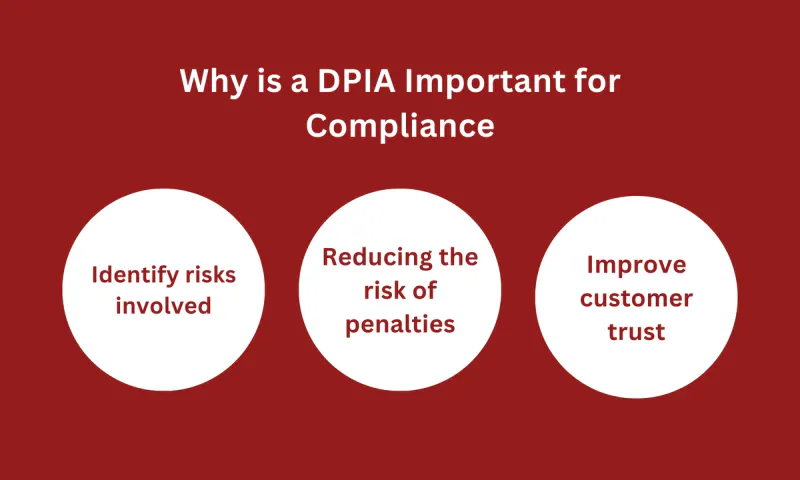
Pitfalls of Treating AI Risk Assessment as Just an Extended PIA
This common mistake creates blind spots:
- Narrow Scope: PIAs miss AI-unique risks like model inversion attacks extracting training data indirectly or agentic systems exhibiting unpredictable goal misalignment.
- Regulatory Non-Compliance: EU AI Act demands specific outputs (for example, post-market monitoring plans) not covered in standard DPIAs.
- Incomplete Mitigation: Bias or transparency issues may not receive rigorous testing if viewed solely through a privacy lens.
- Resource Inefficiency: Redundant documentation without integration wastes time and fails to demonstrate holistic accountability.
Future-Proofing for Evolving AI Risks
AI evolves rapidly: agentic systems (autonomous goal pursuit), multimodal models (text plus image plus video), and federated learning introduce novel risks like emergent deception or chain-of-thought vulnerabilities.
To future-proof:
- Adopt continuous monitoring (EU AI Act post-market obligations, NIST maturity models).
- Build crypto-agility and robustness testing into assessments.
- Monitor regulatory shifts: EU AI Act enforcement, potential US federal standards, state expansions.
- Scale with automation: Tools for bias detection, explainability, and provenance tracking.
Our software and team of privacy experts here at Captain Compliance have built industry leading software that provides a holistic integrated platform to unify these assessments, automate workflows, and ensure alignment across privacy and AI governance, simplifying what could otherwise overwhelm compliance teams.
Mastering these distinctions positions privacy leaders as strategic enablers of trustworthy AI. In an era where AI decisions affect lives daily, thorough, harmonized assessments are the foundation of accountability, trust, and sustainable innovation. To get help with AI governance book a demo with a compliance expert below.
