Know what’s on your site before a plaintiff’s firm does
A free privacy audit shows which cookies, pixels and trackers are running — and which ones commonly appear in privacy claims.
In November 2025, the Office of the Information and Privacy Commissioner of Ontario (IPC) released an updated edition of its flagship guidance document, Planning for Success: Privacy Impact Assessment Guide for Ontario’s Public Institutions. This 74-page resource arrives at a pivotal moment, just months after sweeping amendments to the Freedom of Information and Protection of Privacy Act (FIPPA) made Privacy Impact Assessments (PIAs) a statutory requirement for provincial public bodies starting July 1, 2025.
The guide, now fully aligned with the new legal obligations introduced by Bill 194—the Strengthening Cyber Security and Building Trust in the Public Sector Act—serves as an essential toolkit for ministries, agencies, hospitals, universities, and other institutions covered by FIPPA. While municipal bodies under the Municipal Freedom of Information and Protection of Privacy Act (MFIPPA) are not yet bound by these rules, the IPC strongly recommends they adopt the same practices to minimize risks and build public trust.
With personal information increasingly central to government services—from digital health records to online permitting systems—the updated guide emphasizes proactive privacy-by-design. It transforms what was once a best practice into a structured, mandatory process to identify, assess, and mitigate privacy risks before they materialize.
Bill 194: A Game-Changer for Ontario Public Sector Privacy
Enacted in late 2024 and effective from July 1, 2025, Schedule 2 of Bill 194 modernized FIPPA by codifying long-standing privacy principles into law. For the first time, provincial institutions must conduct written PIAs before collecting any personal information—recorded or unrecorded—and implement risk mitigation measures upfront.
Key statutory requirements now embedded in FIPPA sections 38(3) to 38(6) include documenting:
- The purpose of collection and why the personal information is necessary
- Legal authority for collection, use, or disclosure
- Types of personal information involved and planned uses/disclosures
- Sources of the information
- Who will access it (by position title)
- Limitations on collection, use, or disclosure
- Retention periods
- Safeguards (administrative, technical, physical) and potential risks from breaches
- Steps to prevent, reduce, or mitigate privacy breaches
Institutions must update PIAs before significant purpose changes and provide them to the IPC upon request. Bill 194 also introduced mandatory breach reporting to the IPC (and notification to individuals) when there is a real risk of significant harm, plus annual statistical reporting on incidents.
These reforms align Ontario more closely with federal standards and provincial laws in British Columbia and Quebec, closing gaps that left public sector data handling in a regulatory gray zone.
The Updated Guide: A Step-by-Step Roadmap to Compliance
The November 2025 edition builds on the IPC’s previous PIA guidance but incorporates Bill 194’s mandates explicitly. It maintains a practical, four-phase methodology while adding emphasis on written documentation, pre-collection timing, and mandatory implementation of mitigations.
The core process remains straightforward yet thorough:
- Preliminary Analysis: Quickly determine if the project involves personal information. If not, no full PIA is needed.
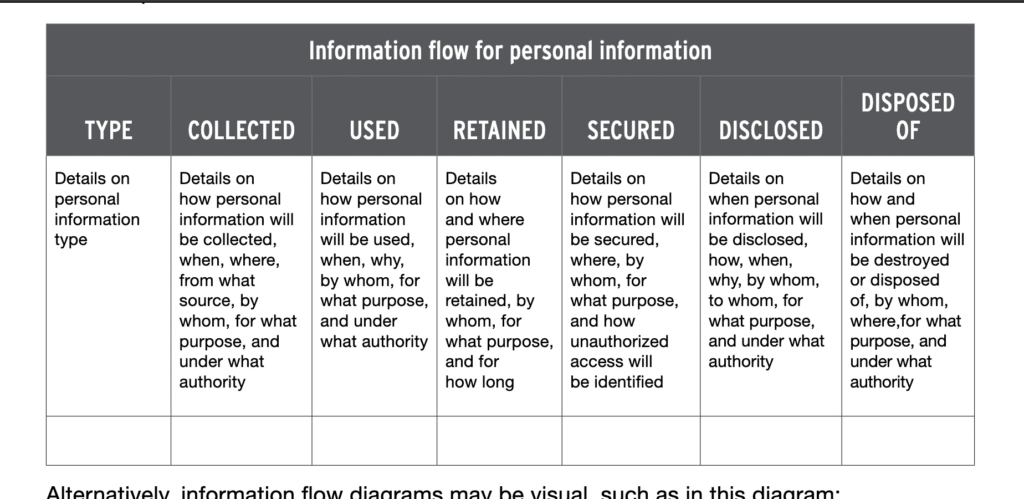
- Project Analysis: Map out the initiative in detail—scope, parties involved, data flows, third-party roles, and technical specifics.
- Privacy Analysis: Evaluate compliance with FIPPA/MFIPPA, identify risks to individuals and the institution, propose mitigations, and weigh alternatives.
- PIA Report: Document findings, secure approvals, implement recommendations, and integrate privacy into project plans.
Appendices provide questionnaires, checklists, and a report template to streamline the work. The guide stresses starting PIAs early in project design—when changes are cheapest and most effective—and involving privacy experts, IT staff, legal counsel, and risk managers from the outset.
Required Elements in Every FIPPA PIA
To meet the new legal minimums, every PIA must now explicitly address:
| Required Element | Description |
|---|---|
| Purpose and Necessity | Explain why personal information is needed and how it achieves the goal |
| Legal Authority | Cite the specific FIPPA/MFIPPA provision or other statute authorizing collection |
| Data Types and Flows | List categories of personal information and planned uses/disclosures |
| Sources and Access | Identify where data comes from and who (by role) can access it |
| Limitations & Retention | Detail restrictions and how long data will be kept |
| Safeguards & Risks | Describe protections and potential harms from breaches |
| Mitigation Steps | Outline preventive measures and breach response plans |
Why Mandatory PIAs Matter for Ontario Business Owners
Privacy risks have never been higher. Cyberattacks on public institutions are routine, and emerging technologies like AI amplify the stakes. A single breach can expose sensitive health, financial, or biographical data of thousands—or millions—of Ontarians.
By requiring PIAs upfront, Bill 194 and the updated guide shift institutions from reactive damage control to proactive protection. Benefits include:
- Reduced likelihood of costly breaches and reputational harm
- Evidence of due diligence for audits, complaints, or litigation
- Minimized data collection (promoting data minimization principles)
- Greater public confidence in government digital services
- Alignment with global standards like GDPR’s Data Protection Impact Assessments
For municipalities still under MFIPPA, voluntary adoption positions them ahead of potential future reforms while delivering the same advantages.
Practical Implications for Ontario’s Public Institutions
With the July 1, 2025 deadline already passed, provincial bodies must embed PIAs into procurement, IT projects, policy development, and service redesign. Universities like the University of Toronto have issued reminders to integrate PIAs into timelines, warning that skipping them risks non-compliance.
Law firms and consultants report a surge in demand for PIA support, particularly for complex initiatives involving cloud services, AI tools, or data sharing. Institutions are advised to train staff, designate PIA coordinators, and leverage the IPC’s templates to scale the process efficiently.
The guide also complements related Bill 194 reforms, such as enhanced breach protocols and forthcoming AI governance rules under the new Enhancing Digital Security and Trust Act.
Ontario is Building a Culture of Privacy
The IPC’s November update signals Ontario’s commitment to modern privacy governance. As Commissioner Patricia Kosseim has emphasized, these changes are about earning and maintaining public trust in an era where personal information powers nearly every government interaction.
Institutions that treat PIAs not as paperwork but as strategic risk management tools will find themselves better protected, more innovative, and more accountable. The guide—freely available and packed with worksheets—provides everything needed to get started.
For Ontario’s public sector, privacy is no longer optional. With Bill 194 and this comprehensive resource, it’s now baked into law and practice.
Put this into practice
Turn privacy guidance into working controls.
Captain Compliance helps teams discover tracking technologies, enforce consent, manage privacy requests and document the evidence behind every decision.