A Y Combinator-backed compliance startup that raised $32 million at a $300 million valuation has imploded amid explosive allegations of “fake compliance as a service.” Delve (delve.co), which promised AI-powered SOC 2, ISO 27001, HIPAA, and GDPR certifications in days instead of months, now faces accusations of pre-generating auditor conclusions, using copy-paste templates for nearly identical reports, routing clients through Indian “certification mills” disguised as U.S. firms, and fabricating evidence of controls that never existed.
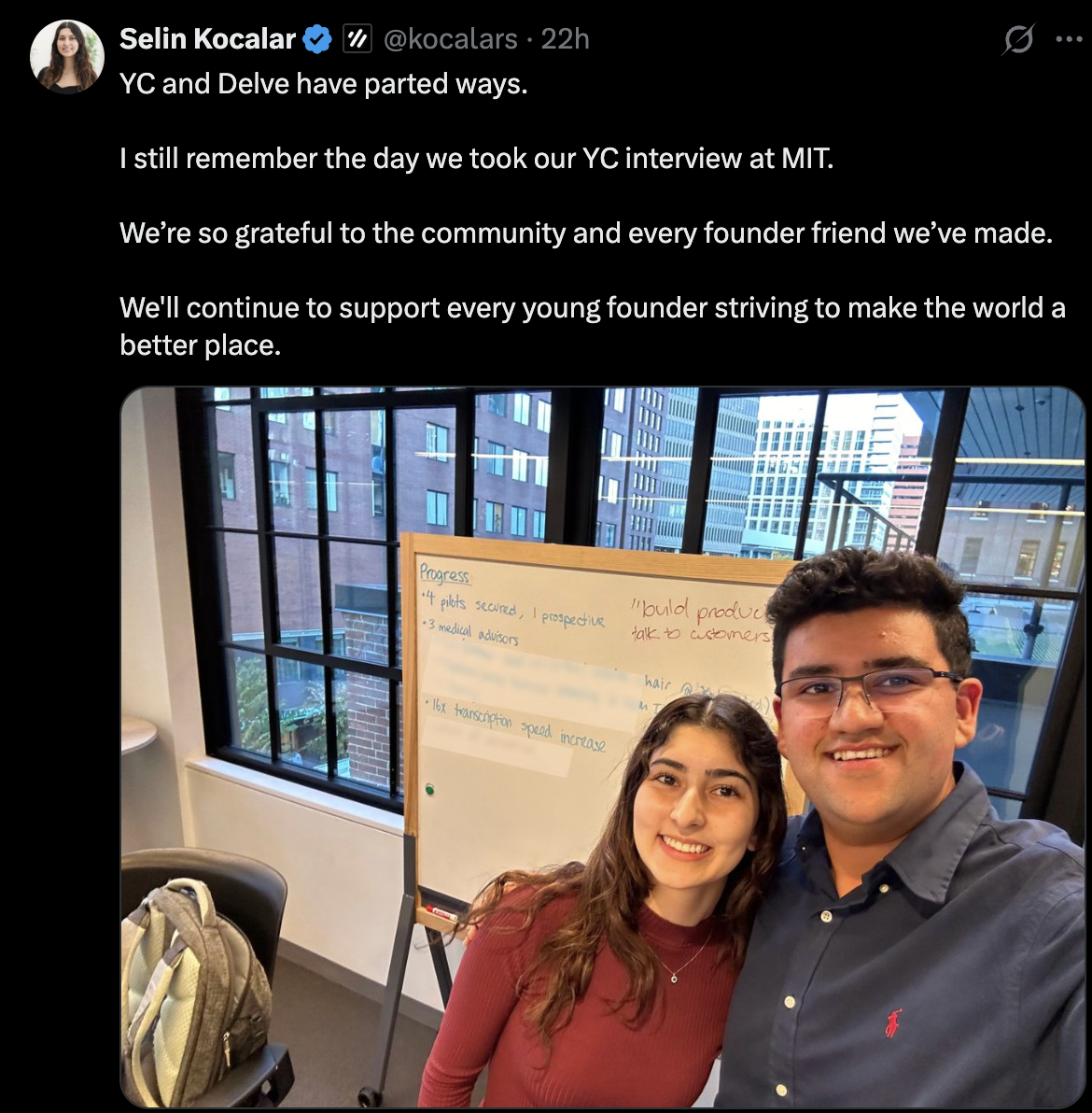
The scandal escalated even further into chaos this week with Part II of an anonymous Substack investigation revealing alleged intellectual property theft from another YC alum, Sim.ai. Hours later, Y Combinator reportedly asked Delve to leave its program, citing a breakdown of trust within the community. The old Delve page on Y Combinator now goes to a 404 page as seen below:

For compliance professionals, CISOs, and startups chasing enterprise deals, this case is a masterclass in why “too good to be true” often is — especially when compliance tools promise speed at the expense of substance and how Captain Compliance has seen very cheap knock off privacy products that put clients in more danger than taking the long game approach to privacy compliance and doing things right it’s wild to see how even in the race to the bottom in SOC2 Compliance that we can see this and its correlations to unworthy privacy software tools in the marketplace.
Who Is Delve?
Founded in 2023 by MIT dropouts Karun Kaushik (CEO) and Selin Kocalar (COO) — both named to Forbes 30 Under 30 — Delve positioned itself as an “AI-native” automation platform. It claimed to help 1,500+ fast-growing tech companies achieve compliance certifications quickly and cheaply. Backed by Insight Partners in a $32M Series A, Delve marketed itself heavily to YC companies and beyond, emphasizing AI agents, pre-populated evidence, and trust pages that could unlock enterprise sales.
Customers paid as little as $6,000–$15,000 for packages that included SOC 2 Type II, ISO 27001, and even HIPAA — far below traditional Big 4 or specialist auditor costs.
Phase 1: The Fake Audit Allegations (March 2026)
The story broke in mid-March via an anonymous Substack writer, “DeepDelver,” in the post “Delve – Fake Compliance as a Service – Part I” (published ~March 18–20, 2026).
Key evidence came from a late-2025 data leak: A publicly accessible Google Spreadsheet (later archived) contained direct links to hundreds of confidential draft audit reports. Analysis of 494 SOC 2 reports and 259 Type II reports revealed:
- Pre-written conclusions: Auditor reports and test results were fully populated before clients submitted their company descriptions, network diagrams, or any evidence — directly violating AICPA independence rules.
- Identical templates: 493 out of 494 SOC 2 reports (99.8%) used the exact same boilerplate text, including the same grammatical errors and nonsensical descriptions. Only the company name, logo, and signature changed.
- Fabricated evidence: The platform auto-generated “passing” documentation — board meeting minutes with placeholders, risk assessments with default 10 risks, fake employee training records, background checks, and security incident logs. Every Type II report claimed zero incidents, zero personnel changes, and zero customer terminations during the review period.
- “U.S.-based” auditors that weren’t: Delve advertised independent U.S. CPA firms. In reality, the vast majority of clients were routed through entities traced to Indian operations using U.S. virtual mailboxes and shell companies.
- No real automation: Despite “AI” claims, the platform relied heavily on manual screenshot uploads, pre-filled forms, and one-click adoption of default policies.
Affected companies reportedly include multiple YC startups and others. Clients who relied on these reports now risk HIPAA criminal liability, GDPR fines up to 4% of global revenue, contract breaches, and lost enterprise deals.
Delve’s Response
In a March 20, 2026 blog post titled “Response to Misleading Claims”, Delve pushed back hard:
- They do not conduct audits or issue reports — only provide a platform for clients and independent auditors.
- Auditors are “established, accredited third-party firms” chosen by customers; templates are standard industry practice.
- Evidence is provided as starting points for customers to customize — not faked.
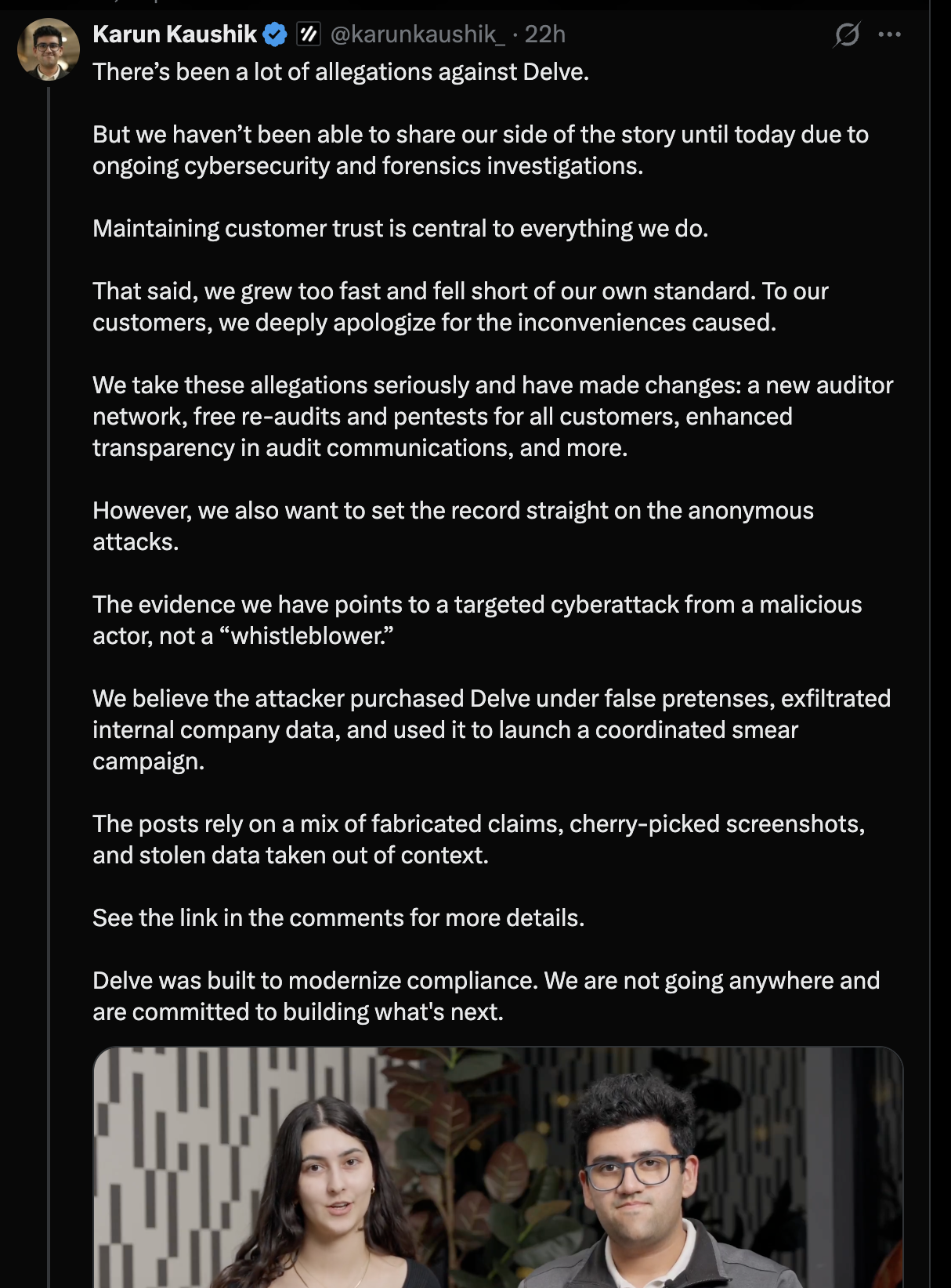
Delve described the Substack as inaccurate and said they were investigating the leak while tightening controls. No admissions of systemic issues were made.
Phase 2: Open-Source Code Theft from Sim.ai (Early April 2026)
Just as the audit story cooled, DeepDelver dropped Part II (~March 30, 2026), accusing Delve of stealing technology from fellow YC company Sim.ai (YC X25).
Sim.ai’s open-source tool SimStudio (Apache 2.0 license, which requires attribution) is a no-code agent-building platform. In April 2025:
- Sim.ai signed up as a Delve customer for $15k (SOC 2 Type I/II + HIPAA). CEO Karun Kaushik personally handled onboarding.
- During the sales call, Delve internally flagged SimStudio as “UI inspo for Pathways” (Delve’s own no-code automation/agent tool).
- Internal documents detailed copying folders and code. Delve’s production code reportedly still contains SimStudio references.
- Delve rebranded it as Pathways, removed attribution, and sold it as “built from the ground up” to enterprise clients including Notion, Brex, Anthropic, and Gusto.
This wasn’t just a license violation — it was portrayed as a betrayal of a paying customer and fellow YC founder. TechCrunch coverage detailed the growing allegations.
The Final Blow: Kicked Out of Y Combinator (This Week)
On or around April 3, 2026, Y Combinator removed Delve from its companies directory and asked the founders to leave the program. A leaked internal Bookface chat from YC CEO Garry Tan reportedly stated:
“We have asked Delve to leave YC. YC is a community, not just an accelerator. The founders in our community have to trust each other, and we have to trust them. When that trust breaks down, there’s really only one thing to do.”
SOC 2 Compliance Fraud
This isn’t isolated “compliance theater” — it’s alleged outright fraud that inverted the auditor-client relationship. Startups desperate for enterprise sales checks were incentivized to look the other way. The scandal highlights:
- Red flags for buyers: If a tool promises full SOC 2 in days/weeks with minimal work, demand proof of auditor independence, real testing, and custom controls.
- Vendor due diligence failure: Many customers accepted identical reports without questioning zero incidents or pre-populated evidence.
- Open-source risks: Even Apache 2.0 requires attribution. Commercial forks without credit erode trust and invite legal/PR blowback.
- AI hype vs. reality: “AI-native” claims masked manual templates and outsourced work.
- If a compliance partner is too cheap, too fast, and doesn’t actually work then you are in a worse position and this holds true not just in SOC 2 Compliance but we see these issues with privacy tools that don’t integrate and setup with your systems to ensure proper compliance.
Parallels with Non-Functional Privacy Tools: The Same Dangerous Risks
The Delve scandal is not an isolated failure of SOC 2 automation — it reflects a broader pattern across compliance technology, particularly in privacy tools for GDPR, CCPA/CPRA, and global data protection laws.
Many privacy tech platforms promise “automated” data mapping, DSAR fulfillment, consent management, privacy impact assessments (PIAs), and cookie consent banners. Yet, like Delve’s SOC 2 offering, they frequently rely on:
- Generic templates and default settings that do not reflect a company’s actual data flows and processing activities
- Superficial automation that creates impressive-looking dashboards but fails during real regulatory scrutiny or data subject requests
- Overhyped AI features that still require heavy manual configuration and ongoing maintenance
The risks mirror those exposed in the Delve case almost exactly:
- False sense of security leading to regulatory violations and massive fines (GDPR penalties can reach 4% of global annual turnover)
- Increased liability in the event of a data breach or investigation
- Potential personal liability for executives and DPOs
- Reputational damage and loss of customer trust when gaps are discovered
- Contractual breaches with enterprise customers who demand real, verifiable compliance
Just as a bogus SOC 2 report can invalidate insurance coverage or cause lost sales, ineffective privacy tools can leave organizations exposed to enforcement actions from the FTC, state attorneys general, or European data protection authorities. In both cases, the marketing of “fast and easy compliance” incentivizes companies to cut corners rather than build robust programs.
The core lesson from Delve applies equally to privacy tech: If a tool sounds too good to be true, and especially if it promises near-instant compliance with minimal effort, it warrants deep skepticism and independent verification.
Practical Advice for Compliance & Legal Counsel Reading This
- If you used Delve: Immediately engage a reputable independent auditor for a real assessment. Review any trust pages or reports for boilerplate language.
- Evaluating compliance tools? Ask: Who signs the final opinion? Are tests designed independently? Can you see raw evidence?
- For founders: Real compliance takes time and effort. Shortcuts can lead to personal liability and we are highly terrified of those who try to beat the system as compliance doesn’t work that way for complex requirements.
Delve’s story is still developing — founders have just now publicly addressed the IP theft allegations in an X post, and no regulatory actions or lawsuits have been confirmed as of this writing. But the damage to trust in automated compliance platforms is already done and VCs have bet on the wrong compliance company.
Stay vigilant. In compliance, trust must be verified — not assumed.
Sources: DeepDelver Substack Part I, Part II, Delve’s official blog, TechCrunch, Hacker News discussions, and contemporaneous reporting (March–April 2026). This article reports allegations as presented in public investigations; Delve’s 22 year old founders maintain its platform supports legitimate, independent audits. We will update as this story unfolds further.
