A small pop-up window appears when you visit a website, asking about cookies. You click “Reject All,” confident you’ve protected your privacy. But behind the scenes, tracking cookies are already collecting your data, your choice ignored by a faulty cookie banner. This scenario isn’t hypothetical—it’s happening across thousands of websites right now, exposing companies to massive legal and financial risks.
A faulty cookie banner is a website consent tool that fails to properly manage user choices about tracking and data collection. Whether due to technical glitches, poor design, or intentional deceptive patterns, these broken banners lead to illegal data collection, regulatory fines, class action lawsuits, and erosion of customer trust. Recent enforcement actions, including Honda’s $632,500 penalty from California’s privacy regulator, demonstrate that authorities are actively investigating and punishing companies with non-compliant cookie consent mechanisms.
The stakes have never been higher. As privacy laws proliferate worldwide and consumers become more aware of their rights, faulty cookie banners represent a ticking time bomb for organizations. Understanding the common failures, legal risks, and solutions is essential for any business operating online. The other huge risk is from privacy litigators going after companies using broken banners or ones that are set up with dark patterns (see how HelloeFresh paid out $7.5 million for dark patterns last year) which in our research is 90% of all consent banners we see. While Captain Compliance banners pass the test and protect clients the majority of other banners do not.
Understanding Cookie Banners and Consent Requirements
Cookie banners emerged as a response to privacy regulations requiring websites to obtain user consent before placing non-essential cookies on their devices. Cookies are small text files that websites store in browsers to remember user preferences, enable functionality, track behavior, and deliver targeted advertising.
Privacy laws like the General Data Protection Regulation (GDPR) in Europe and the California Consumer Privacy Act (CCPA) establish strict rules around consent. Under GDPR, consent must be freely given, specific, informed, and unambiguous. This means pre-checked boxes don’t count as valid consent, and users must take affirmative action to agree. The ePrivacy Directive further requires consent before storing or accessing information on user devices, with limited exceptions for strictly necessary cookies.
Cookie banners serve as the primary mechanism for obtaining this consent. When implemented correctly, they present users with clear information about what cookies are used and for what purposes, offer genuine choice about accepting or rejecting different cookie categories, and ensure that cookies are only placed after consent is obtained. When banners are faulty, they undermine these fundamental privacy protections and expose organizations to significant liability.
Common Cookie Banner Faults and Technical Failures
No Easy Opt-Out Options
One of the most prevalent cookie banner faults is the absence of a straightforward way to reject non-essential cookies. Some websites present only an “Accept” button, forcing users who want to decline to hunt through layers of settings or giving them no option at all. Others employ dark patterns where the “Accept All” button is prominently displayed in bright colors while “Reject All” is hidden behind a “Manage Preferences” link or buried as small gray text.
This design choice isn’t accidental—it’s intended to manipulate users toward accepting tracking. Under GDPR and many other privacy laws, declining consent must be as easy as accepting. When websites make rejection unnecessarily difficult, they violate consent requirements and potentially engage in deceptive trade practices.
Pre-Ticked Boxes and Default Consent
Pre-ticked boxes depending on the location of the visitor. If in Europe nothing should be turned on by default in the USA it’s legally allowed but if you have all the boxes checked that can represent another common fault where non-essential cookies are enabled by default, requiring users to actively uncheck boxes to decline. This violates the fundamental principle that consent must involve affirmative action by the user. Regulatory guidance consistently states that consent cannot be inferred from inaction or pre-selected options.
The Honda case illustrates this problem perfectly. California’s Privacy Protection Agency investigation revealed that Honda’s cookie banners defaulted to advertising cookies being enabled. Users who didn’t interact with the banner or who clicked through quickly without reading found themselves tracked by advertising cookies they never consciously accepted. This default-on approach resulted in a $632,500 fine and mandatory corrective actions.
Technical Implementation Failures
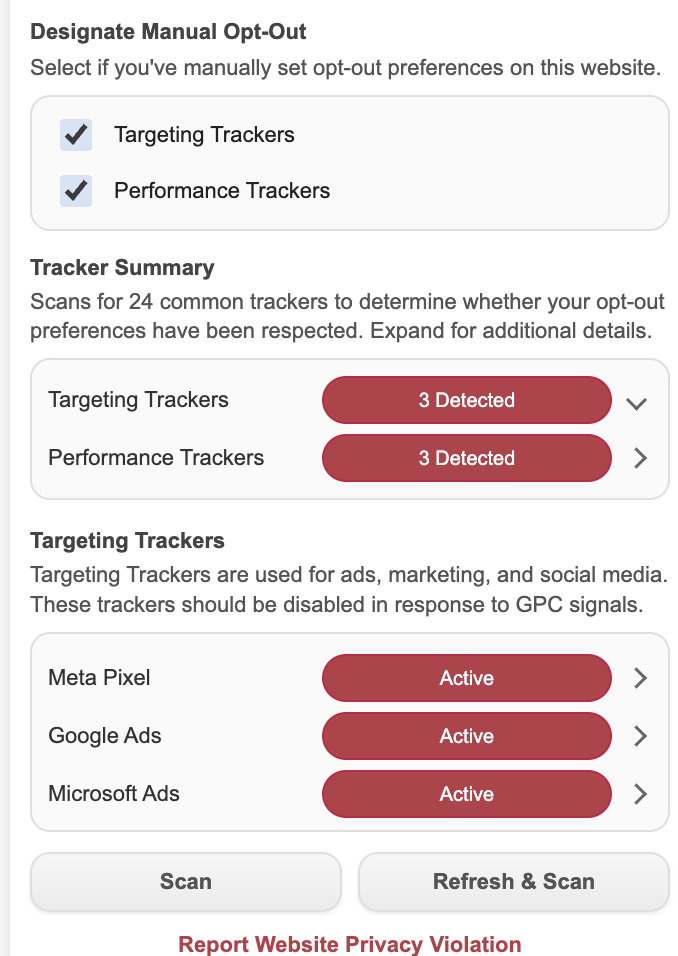
Even well-intentioned cookie banners can fail due to technical implementation problems. Common technical faults include cookies dropping before the banner loads or before users make a choice, tag management systems misconfigured to fire tracking scripts before consent is obtained, hard-coded tracking tags that bypass the consent management platform entirely, and consent choices not being properly communicated to all tracking technologies.
These technical failures often arise from poor coordination between marketing teams implementing tracking tools and developers managing the consent infrastructure. A marketer might add a new analytics platform directly to the website code without integrating it with the consent management system, causing it to track all visitors regardless of their choices.
Confusing or Deceptive Language
Cookie banners that use vague, confusing, or misleading language create another category of fault. Buttons labeled “Okay,” “Continue,” or “Got It” instead of clear “Accept” or “Decline” options leave ambiguity about what users are consenting to. Dense legal jargon makes it difficult for average users to understand what they’re agreeing to, while incomplete information about cookie purposes or data sharing prevents informed consent.
Some banners employ false equivalence by describing accepting tracking cookies as being necessary to “support the site” or “access content,” implying that rejection will prevent users from viewing the website. Unless this is actually true—which would raise separate accessibility concerns—such language constitutes misleading manipulation.
Miscategorization of Cookies
A particularly problematic fault involves miscategorizing cookies to circumvent consent requirements. Regulations allow strictly necessary cookies—those essential for basic website functionality like shopping carts or security features—to be placed without consent. Some websites exploit this by falsely categorizing marketing, analytics, or advertising cookies as “essential” or “necessary.”
This miscategorization might be intentional deception or result from misunderstanding what qualifies as strictly necessary. Either way, it constitutes a compliance violation. Marketing cookies that track users across websites or analytics cookies that provide detailed behavioral insights are not necessary for the website to function and require user consent.
Accessibility Barriers
Faulty cookie banners often create accessibility issues for users with disabilities. Common problems include banners that can’t be navigated using only a keyboard, preventing users who can’t use a mouse from making choices, consent interfaces that don’t work with screen readers used by visually impaired users, text that’s too small or low-contrast for users with vision impairments, and modal windows that trap keyboard focus without providing a clear way to dismiss them.
Beyond being a consent management failure, accessibility problems violate disability rights laws in many jurisdictions. A user who can’t effectively interact with your cookie banner to decline tracking hasn’t given valid consent, yet they’re still being tracked.
Outdated Cookie Declarations
Cookie declarations—the lists that show users what cookies are placed and for what purposes—frequently fall out of date. Cookies change frequently as websites add new tools, update existing technologies, or remove old ones. When declarations aren’t regularly updated, they become inaccurate, failing to properly inform users about what they’re consenting to.
Automated cookie scanning tools can help identify all cookies actually being placed on your site, but many organizations fail to implement regular scanning and updating processes. This oversight means users may be consenting based on incomplete or incorrect information.
Legal and Regulatory Consequences
The Honda Case: A Cautionary Tale
The Honda penalty from the California Privacy Protection Agency provides a clear example of enforcement consequences for faulty cookie banners. The CPPA’s investigation, which began in 2023, uncovered multiple violations including default-enabled advertising cookies, inadequate consent mechanisms, and tracking that occurred regardless of user choices.
The $632,500 fine, while substantial, represents only the direct financial penalty. Honda also faced mandatory corrective actions, negative publicity that damaged brand reputation, legal costs for the investigation and compliance remediation, and the expense of rebuilding trust with California consumers. For many organizations, the indirect costs of enforcement actions exceed the fine itself. Honda was also using a company called OneTrust for their banner which then led to Healthline & Tractor Supply Company who were also using their privacy software to also get fined millions of dollars.
Class Action Litigation Explosion
Cookie banner failures have spawned a wave of class action lawsuits across multiple jurisdictions. Plaintiffs allege various legal violations including invasion of privacy for tracking without consent, wiretapping under laws prohibiting electronic surveillance, fraud and misrepresentation for deceptive consent interfaces, violations of state consumer protection acts, and breaches of website terms of service.
These lawsuits often seek substantial damages, particularly under statutes like the California Invasion of Privacy Act that provide for statutory damages per violation. With potentially thousands or millions of website visitors affected, the aggregate exposure can reach hundreds of millions of dollars. Even when companies ultimately prevail, the legal defense costs alone can be substantial.
Regulatory Investigations and Fines
Privacy authorities worldwide are increasingly scrutinizing cookie consent mechanisms. European data protection authorities have issued fines against major companies for consent violations, with penalties reaching into the millions of euros. The French data protection authority CNIL has been particularly active, penalizing companies including Google and Amazon for cookie consent failures.
In the United States, the Federal Trade Commission investigates deceptive cookie practices under its consumer protection authority, while state attorneys general pursue enforcement under state privacy and consumer protection laws. The California Privacy Protection Agency, established specifically to enforce the California Privacy Rights Act, has made cookie consent compliance a priority area.
Reputational Damage and Loss of Trust
Beyond direct legal and financial consequences, faulty cookie banners damage organizational reputation and erode customer trust. Privacy-conscious consumers view deceptive or broken consent mechanisms as evidence that a company doesn’t respect user autonomy or data rights. This perception affects customer loyalty, brand value, and competitive positioning.
Media coverage of enforcement actions and lawsuits amplifies reputational harm. Stories about companies deceiving users or violating privacy laws spread quickly through social media and news outlets, reaching far beyond those directly affected. Rebuilding trust after such incidents requires significant time and investment.
How to Fix and Prevent Cookie Banner Failures
Provide Clear, Equal Choices with the same colors
Effective cookie banners present users with clear, equally prominent options. Best practices include offering distinct “Accept All,” “Reject All,” and “Manage Preferences” buttons at the same visual level, ensuring reject options are as easy to select as accept options without requiring navigation through multiple screens, using clear, unambiguous language that explains what each choice means, and avoiding dark patterns that manipulate users toward acceptance.
The colors of the buttons should not be different. A Bright BLUE button that says Accept All and a faded grey button that says reject all in lower case is not going to pass and is considered a dark pattern.
The “Manage Preferences” option should allow granular control over different cookie categories—strictly necessary, functionality, analytics, advertising—with clear descriptions of each category’s purpose. Users should be able to accept some categories while rejecting others.
Eliminate Pre-Ticking and Defaults
All non-essential cookies must be disabled by default, requiring affirmative user action to enable them. When users access your cookie preference interface, every non-essential category should be switched off. Only after users actively enable specific categories or click “Accept All” should those cookies be placed.
This requirement extends to returning visitors as well. While you can remember a user’s previous choices to avoid showing the banner repeatedly, you cannot assume continued consent if preferences expire or if you introduce new cookie purposes not covered by the original consent.
Conduct Thorough Technical Audits
Regular technical audits identify implementation failures before regulators or plaintiffs do. Audit components should include consent mode verification to ensure your tag management system respects user choices, tag sequencing analysis to confirm cookies only fire after appropriate consent, hard-coded tag detection to find tracking scripts that bypass your consent management platform, and cross-browser and device testing to ensure consistent behavior across different environments.
Many organizations discover during audits that marketing pixels or analytics tags are loading before the consent banner appears or that certain tracking technologies aren’t properly integrated with the consent management system. Identifying and fixing these issues proactively prevents legal exposure.
Implement Proper Technical Architecture
Sound technical architecture ensures consent choices are respected throughout your digital infrastructure. Key architectural elements include a robust consent management platform that centrally manages user preferences, proper integration between your consent tool and tag management system, consent signal propagation that communicates user choices to all tracking technologies, and comprehensive logging that records consent actions for compliance documentation.
Google’s Consent Mode and similar frameworks from other platforms provide standardized ways to communicate consent status to advertising and analytics tools. Implementing these frameworks ensures that major tracking platforms respect user choices even when full consent isn’t granted.
Regular Updates and Maintenance
Cookie landscapes change constantly as websites add new tools, update existing technologies, and modify purposes for data collection. Maintenance processes should include monthly automated cookie scans to identify all cookies being placed, quarterly reviews of cookie declarations to ensure accuracy, immediate updates when new tracking technologies are deployed, and annual comprehensive audits of the entire consent management system.
Assign clear responsibility for cookie banner maintenance. Too often, these critical privacy tools fall into a gap where no team clearly owns them, leading to drift and degradation over time.
Ensure Accessibility Compliance
Make cookie banners accessible to all users by following Web Content Accessibility Guidelines standards. Accessibility requirements include full keyboard navigation without mouse dependency, compatibility with screen readers and other assistive technologies, sufficient color contrast for visually impaired users, appropriate font sizes and responsive design, and focus management that allows users to dismiss or interact with banners effectively.
Test your banner with actual assistive technologies and, ideally, with users who rely on these tools. Automated accessibility scanners catch some issues but not all, particularly around the user experience for people with disabilities.
Document Everything
Comprehensive documentation demonstrates compliance efforts and provides defense against legal claims. Documentation should include records of all consent actions with timestamps and user identifiers, technical specifications for how your consent system operates, privacy impact assessments analyzing consent mechanism risks, testing results and remediation actions for identified issues, and third-party audit reports validating compliance.
Under GDPR’s accountability principle, organizations must be able to demonstrate compliance. Detailed documentation showing your consent mechanisms work correctly and that you actively monitor and maintain them significantly strengthens your compliance posture.
Building Trust Through Proper Consent & Using Captain Compliance To Fix Faulty Banners on Your Site
Cookie banners represent more than mere compliance checkbox exercises—they’re your organization’s first privacy conversation with users. A well-functioning banner that respects user autonomy builds trust and demonstrates genuine commitment to privacy. A faulty banner erodes trust and exposes you to substantial legal and financial risk.
The regulatory and legal landscape will only intensify. More jurisdictions are enacting comprehensive privacy laws, enforcement authorities are becoming more sophisticated in detecting violations, and plaintiffs’ attorneys are refining their strategies for cookie banner lawsuits. Organizations that view proper consent management as optional or deprioritize it relative to tracking and advertising goals are courting disaster.
The good news is that fixing cookie banner faults is achievable with proper focus and resources. Our modern consent management platforms provide robust tools for managing preferences, numerous vendors offer expertise in implementation and compliance, and the path to proper consent is well-established through regulatory guidance and industry best practices.
Don’t wait for an enforcement action or lawsuit to fix your cookie banner. Let us help audit your current implementation, identify and remediate failures, establish ongoing monitoring and maintenance processes, and prioritize user privacy alongside business objectives. The investment in proper consent management pays dividends through reduced legal risk, enhanced customer trust, and the peace of mind that comes from respecting the privacy rights of everyone who visits your website.
