Know what’s on your site before a plaintiff’s firm does
A free privacy audit shows which cookies, pixels and trackers are running — and which ones commonly appear in privacy claims.
For the past several years, corporate legal departments, chief privacy officers, and data protection leads have operated under a comforting, albeit technical, administrative paradigm. When managing the compliance risks inherent in using Google Analytics 4 (GA4) in tandem with Google Ads, counsel possessed a dual-key security architecture. If the front-end code on a company’s public website—specifically the cookie consent banner managed by a Consent Management Platform (CMP)—suffered a technical failure, misconfiguration, or a race condition, a backend structural safeguard remained firmly in place.
That safeguard was the “Google Signals” toggle nestled within the Google Analytics administration dashboard. By keeping this toggle deactivated, data protection teams maintained a centralized, server-side kill-switch. It served as a legal and technical insurance policy: even if a website’s front-end script accidentally permitted data collection before a user consented, Google Signals was barred from linking that behavioral web data with the personal, signed-in Google account profiles of users for cross-context behavioral advertising.
On June 15, 2026, Google is unilaterally dissolving this backend safety net.
In an engineering consolidation that Google frames as a move toward “destination-specific controls,” the tech giant will strip the Google Signals toggle of its dual-layer regulatory utility. Post-deadline, the Google Signals setting will strictly govern internal behavioral reporting and user recognition within the vacuum of GA4 itself. It will completely cease to act as a backend barrier or manual override for Google Ads.
Consequently, Google Consent Mode—driven entirely by the code deployed on your active web properties—will become the single source of truth and the exclusive point of failure.
This architectural shift is not merely a technical update for your marketing or analytics departments; it is a fundamental reconfiguration of your enterprise data-processing risk profile. If your front-end code misfires for even a millisecond, there is no longer a corporate backstop to prevent the unlawful processing of user data. Below, we examine the immediate statutory exposures this change creates under the GDPR, CCPA/CPRA, and CIPA, alongside the mandatory cross-functional actions your organization must execute before the June 15 deadline.
The Engineering Realignment: From Dual-Gate to Binary Risk
To understand the legal vulnerability, one must first understand the technical transition. Under the historical framework, data collection and profile matching required two keys to unlock:
[User Visit] ──> [Gate 1: Website CMP Banner] ──(Passed Data)──> [Gate 2: GA4 Google Signals Toggle] ──> [Google Ads Target Profile]
If Gate 1 failed due to a caching error or a broken script, Gate 2 remained locked if corporate counsel ordered it turned off. The data could not flow seamlessly into the Google Ads machinery to build hyper-targeted, cross-context marketing audiences based on a user’s authenticated Google profile.
Starting June 15, 2026, the architecture collapses into a single, binary light switch governed entirely by your website’s live execution environment:
[User Visit] ──> [Single Gate: Website CMP Banner / Consent Mode Code] ──> [Google Ads Target Profile]
                                                                        (Zero Backend Override)
If your website infrastructure transmits an explicit or implicit parameter of ad_storage = granted, Google Ads immediately ingests the data, associates the activity with signed-in Google profiles, and populates your advertising audiences. If your CMP fails, loads out of order, or defaults to an opt-in state prior to user interaction, Google Ads will execute full collection, wholly indifferent to whatever restrictive parameters you have configured inside the GA4 admin dashboard. The manual override is dead; your public-facing code is now the final, absolute legal authority.
Regulatory Exposure Under the GDPR: The Materiality of the Transition
For enterprises subject to the jurisdiction of the European Data Protection Board (EDPB) and national supervisory authorities under the General Data Protection Regulation (GDPR), this structural transition carries severe transparency and accountability implications.
Under Article 12 and Article 13 of the GDPR, data controllers are legally bound to provide data subjects with concise, transparent, intelligible, and easily accessible information regarding the precise modalities of data processing. Many institutional Data Protection Impact Assessments (DPIAs) and publicly available Privacy Policies were explicitly drafted around the structural assumption that Google Signals served as an independent, server-side data-minimization control.
When an organization removes an architectural safeguard that previously prevented the compounding of analytics tracking into cross-context behavioral profiling, that removal constitutes a material change in the nature, scope, context, and purposes of processing under GDPR jurisprudence.
Furthermore, if your CMP defaults to a pre-checked or assumed “granted” state while initializing Consent Mode parameters—even for a brief programmatic window before the user interacts with the user interface—your organization is actively violating the strict mandates of Article 7 (Conditions for Consent) and Article 25 (Data Protection by Design and by Default). Because Google will no longer intercept or sanitize this data via the Signals toggle on the backend, any programmatic leakage directly exposes the corporate entity to regulatory investigations, compliance enforcement actions, and the tier-two statutory fines of up to €20 million or 4% of global annual turnover.
Statutory Liability Under the CCPA/CPRA: The Preservation of “Service Provider” Status
Under the California Consumer Privacy Act (CCPA), as amended by the California Privacy Rights Act (CPRA), the definition of “sharing” personal information for cross-context behavioral advertising carries strict statutory baggage.
Historically, companies utilizing Google Analytics could argue that by disabling Google Signals and restricting data sharing via dashboard settings, they were utilizing Google strictly as a “Service Provider” under Cal. Civ. Code § 1798.140(ag). A Service Provider is legally prohibited from retaining, using, or disclosing personal information for any purpose other than for the specific business purposes specified in the contract.
When the Google Signals toggle is stripped of its ability to override Google Ads data ingestion, the mechanism governing whether data is “sold” or “shared” shifts exclusively to the front-end string passed via Consent Mode (specifically the ad_user_data and ad_personalization parameters).
If a website’s front-end code fails to properly capture a consumer’s “Do Not Sell or Share My Personal Information” request, or if Consent Mode fails to dynamically downshift its transmission from “granted” to “denied” in real-time, your organization is suddenly executing an unauthorized “sale” or “share” of personal data to a third party. Google Analytics and Google Ads lose their protective veneer as a Service Provider data stream. You become a primary seller or sharer of consumer data without having provided the mandated statutory opt-out mechanisms, exposing the enterprise to civil penalties enforced by the California Privacy Protection Agency (CPPA) at $7,500 per intentional violation.
The CIPA Wiretapping Threat: Fueling the California Litigation Firestorm
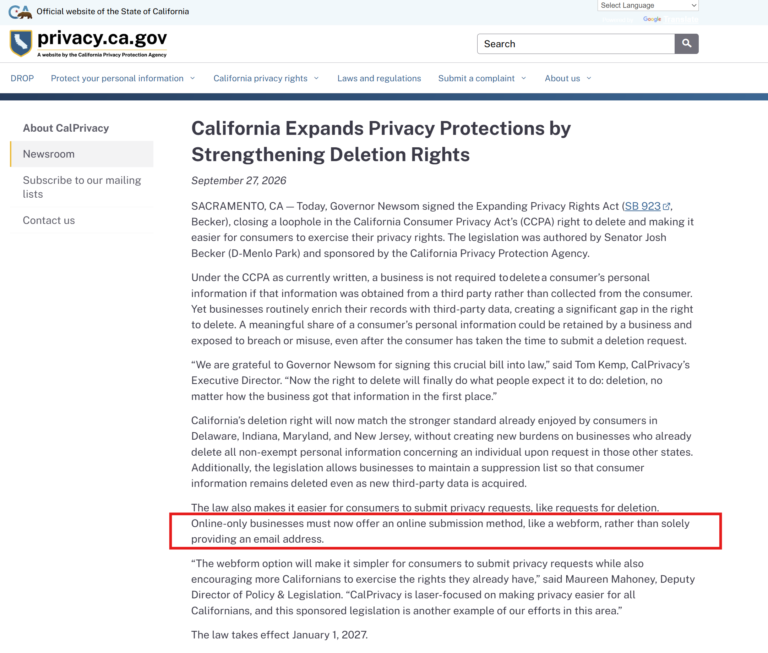
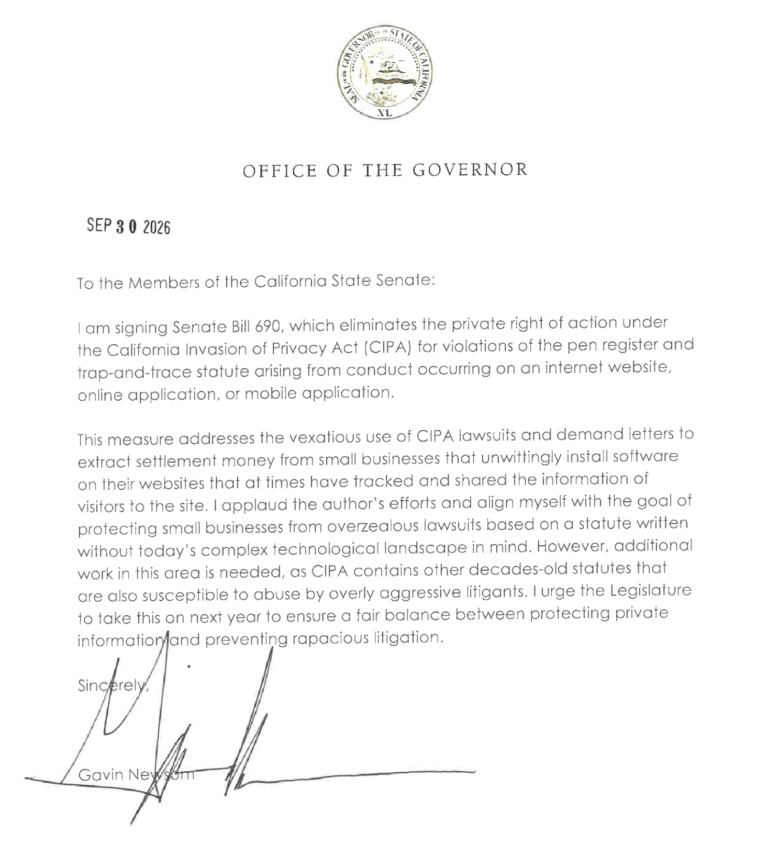
Perhaps the most immediate financial and litigation risk stemming from this technical realignment involves the California Invasion of Privacy Act (CIPA), specifically Cal. Penal Code § 631 and § 632.7. We have covered over 40 different law firms that have been filing relevant CIPA wiretapping lawsuits and are winning these cases against businesses small and large. Now it’s time to protect with the help of Captain Compliance’s privacy tools.
California is currently experiencing an unprecedented, highly coordinated wave of class-action litigation leveraging historic anti-wiretapping statutes against modern web operators. Plaintiffs’ firms are filing hundreds of complaints alleging that websites utilizing third-party analytical scripts, tracking pixels, and chat plugins are actively permitting third-party entities to “intercept” and record the contents of communications without the explicit, prior, un-coerced consent of all parties to the communication.
The defense strategy in many of these CIPA actions hinges on demonstrating that the tracking technologies in question were heavily throttled, anonymized, or structurally prevented from cross-referencing the user’s communications with macro-behavioral profiles across the broader web. The deactivation of Google Signals was a critical component of that defensive argument.
By removing the Signals backend barrier, Google places the entire evidentiary weight of a CIPA defense on the flawless, real-time performance of your front-end code. If a plaintiff can demonstrate a “race condition”—wherein the Google tag initializes and transmits a hit payload containing a unique identifier or custom dimension to Google servers prior to the moment the user clicks the “Accept” button on a cookie banner—the statutory elements of a CIPA violation are arguably met. Because CIPA provides for statutory damages of $5,000 per violation, an intermittent front-end code error impacting thousands of California site visitors creates an existential, multi-million-dollar class-action liability overnight.
Pre-Deadline Mandate: Three Compulsory Actions Before June 15
To mitigate these compounding operational and statutory liabilities, corporate legal departments must immediately issue an internal directive to their marketing and technical analytics teams. The following three steps are non-negotiable and must be completed prior to the June 15 execution date:
I. Formally Audit Your CMP Implementation Against Consent Mode Architecture
Do not accept verbal assurances from your web development team that your cookie banner “is working.” Demand a rigorous, technical audit of your Consent Mode implementation utilizing diagnostic utilities such as the Google Consent Mode Inspector or Google Tag Assistant.
Your legal or compliance lead must review the explicit execution sequence of the Global Data Layer. Specifically, you must verify that upon a “cold” user arrival (a first-time visitor who has not yet interacted with the CMP banner), the system explicitly fires the default command setting all core parameters to denied:
gtag('consent', 'default', {
  'ad_storage': 'denied',
  'ad_user_data': 'denied',
  'ad_personalization': 'denied',
  'analytics_storage': 'denied'
});
The system must be technically incapable of upgrading those values to 'granted' until a positive, affirmative action is taken by the user. If your tracking scripts execute before this default command completes, you have a data leak that requires immediate remediation.
II. Execute a Comprehensive Revision of Privacy Policies and Cookie Disclosures
Review your public-facing privacy disclosures and internal data processing registers. If your documentation contains language stating that your organization “restricts third-party advertising profile mapping via backend analytics configurations” or relies on “Google Signals deactivation to ensure consumer privacy,” that language will become factually incorrect on June 15.
Update your disclosures to clearly reflect that user consent choice is managed dynamically and exclusively at the site level via Consent Mode parameters. Ensure your cookie notices accurately describe the precise data points transmitted to Google Ads when a user selects an opt-in path, thereby maintaining your statutory transparency compliance.
III. Convene a Cross-Functional Compliance Convergence
The structural removal of this privacy backstop demands a coordinated response between your Data Protection Officer (DPO), internal legal counsel, and your digital marketing leadership. Marketing teams are under immense pressure to maximize Return on Ad Spend (ROAS) and may look to deploy “Advanced Consent Mode”—a configuration that sends un-consented, anonymous “pings” to Google for algorithmic conversion modeling.
While Advanced Consent Mode can salvage valuable optimization data for marketing, it carries a distinct legal risk profile compared to “Basic Consent Mode” (which blocks tags completely until consent is obtained). Legal and marketing must collectively evaluate whether the organization’s risk tolerance accommodates these anonymous pings, particularly within highly regulated spaces or strict opt-in jurisdictions.
The Era of Code-As-Law
The June 15 corporate update from Google marks the formal end of dashboard-driven compliance governance for search and behavioral advertising. Corporate counsel can no longer rely on a centralized, administrative toggle to shield the enterprise from the compliance failures of an unstable website codebase.
When Google removes the manual override, your front-end code officially becomes your sole legal defense. Enterprise organizations must treat the upcoming deadline not as a routine software patch, but as a critical regulatory shift requiring rigorous technical validation, updated legal documentation, and absolute precision in data governance.
Put this into practice
Turn privacy guidance into working controls.
Captain Compliance helps teams discover tracking technologies, enforce consent, manage privacy requests and document the evidence behind every decision.