These complaints underscore a fundamental truth: Privacy isn’t a checkbox anymore it’s a dynamic relationship between consumers and companies. As California’s groundbreaking laws like the CCPA and CPRA empower individuals with unprecedented control over their personal information, missteps in honoring these rights are drawing sharp regulatory attention. For compliance teams, this data isn’t alarming—it’s actionable intelligence. In this update, we’ll break down the stats, spotlight the hotspots, and arm you with strategies to stay ahead of the curve. If you’re new to DSARs, don’t miss our primer: What Is a DSAR? and learn how we can automate Data Subject Rights Requests for your organization and save you time, money, and regulatory inquiries.
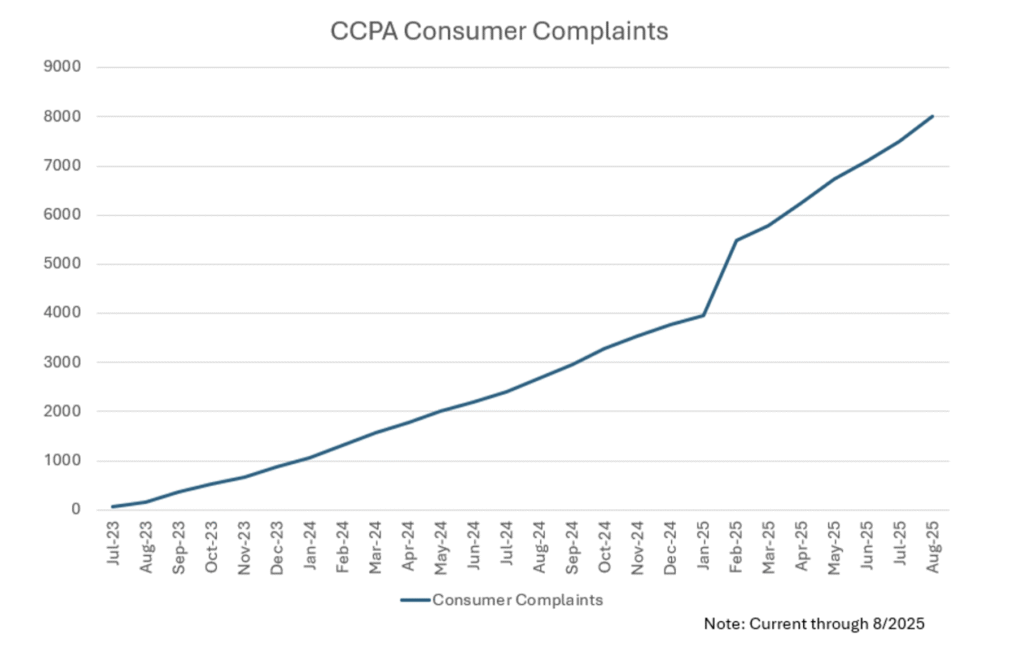
The Numbers Tell the Story: A Surge in Consumer Activism
The CPPA’s Enforcement Division, established in 2023 as part of California’s progressive privacy evolution, has become a magnet for grievances. Over the 26-month period analyzed, complaints poured in at an accelerating pace, reflecting growing consumer awareness fueled by high-profile breaches, media coverage, and the CPPA’s own outreach efforts. This isn’t hyperbole: The raw tally of 8,265 represents real frustrations from Californians and potentially millions more nationwide, as other states mirror CCPA-style regimes.
What makes this data particularly potent? Consumers can tag multiple categories per complaint, painting a multifaceted picture of pain points. The most prevalent revolve around core data subject rights—those enshrined in the CCPA/CPRA that let individuals demand insight into, correction of, or erasure of their data. Here’s the breakdown of the top categories:
| Category | Percentage of Complaints | Description | Compliance Risk |
|---|---|---|---|
| Right to Delete | 51% | Requests to erase personal information from systems and third parties. | High—Overlooks can lead to “zombie data” exposures. |
| Collection, Use, Storing, or Sharing of Personal Information | 44% | Concerns over opaque practices in how data is handled or disclosed. | Medium-High—Triggers opt-out and transparency audits. |
| Right to Limit Use/Sale | 39% | Demands to restrict sensitive data sales or sharing for targeted ads. | High—Non-compliance invites immediate opt-out enforcement. |
| Right to Access/Know | ~25% (estimated overlap) | Queries for details on what data is collected and why. | Medium—Often bundled with deletion requests. |
| Right to Correct | <5% (least common) | Fixes to inaccurate personal info. | Low but growing with AI accuracy mandates. |
Note: Percentages reflect primary selections but include multiples, so totals exceed 100%. Least common categories? Financial incentive programs, children’s privacy, and the right to correct—highlighting where consumers feel most empowered (or perhaps where education lags).
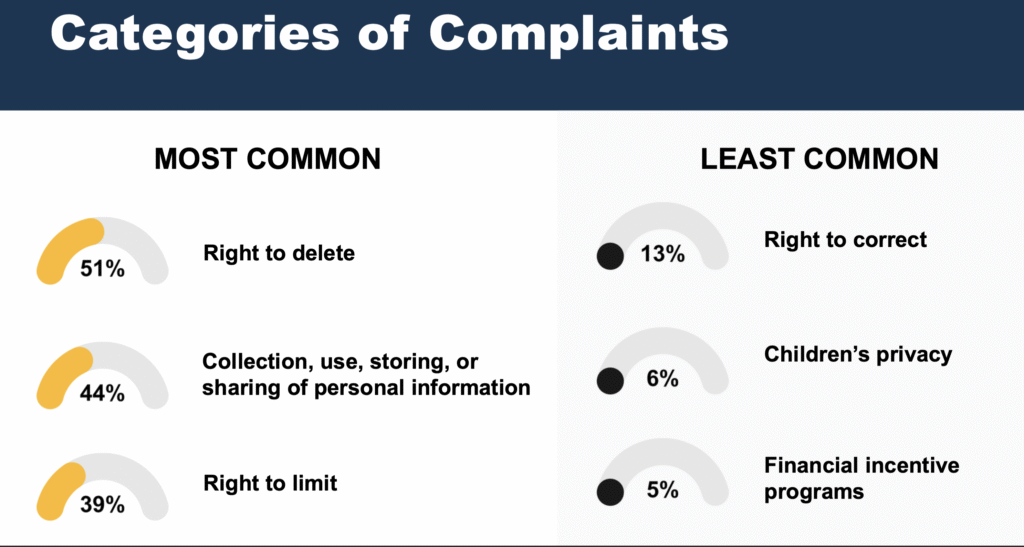
These figures, drawn from the CPPA’s official enforcement materials, reveal a clear pattern: Data subject rights aren’t abstract legalese—they’re the frontline of consumer recourse. With the CPPA’s mandate to investigate and penalize violations (up to $7,500 per intentional breach), even a single overlooked request can snowball into a full-blown inquiry.
Why DSARs Dominate: The Pitfalls of Privacy in Practice
So why do DSARs account for over half of complaints? It’s deceptively simple: They’re easy to get wrong in a complex digital ecosystem. Most organizations still funnel these requests through generic customer service inboxes—email black holes where “privacy@company.com” shares space with billing queries. The result? Requests languish, 45-day deadlines (extendable to 90) evaporate, and verifiable fulfillment becomes a nightmare.
Consider the anatomy of a typical slip-up:
- Fragmented Routing: DSARs arrive via email, chat, or phone but get triaged by non-specialists untrained in CCPA nuances.
- Scope Creep: Verifying “reasonable” requests while redacting sensitive third-party data is labor-intensive without automation.
- Proof Problems: How do you document deletion across silos, vendors, and backups? Manual logs crumble under scrutiny.
- Scale Challenges: As complaints climb, so does volume— one viral social media post about a denied request can trigger dozens more.
EPIC’s recent report on state AG enforcement echoes this: Single-state actions like California’s dominate data privacy suits (90% of 171 cases), often stemming from unresolved consumer gripes.
“Consumers are the canaries in the coal mine,” notes CPPA Deputy Director of Enforcement Michael Macko in the agency’s September update. “Their complaints guide our priorities, from education to escalation.”
The ripple effects? A single complaint can escalate to a CPPA probe, inviting fines, injunctions, and public shaming. In a multistate world— with Virginia, Colorado, and Texas hot on California’s heels—non-compliance in one jurisdiction risks a domino effect.
Compliance Implications: From Reactive to Resilient
For businesses, this update is a wake-up: Privacy compliance isn’t optional; it’s a competitive edge. The CPPA’s data signals regulators’ laser focus on verifiable rights fulfillment, with enforcement actions poised to ramp up in 2026 as the agency’s resources grow. Early movers—those automating DSAR workflows—aren’t just dodging fines; they’re building trust that boosts retention and reduces churn.
Beyond penalties, there’s reputational capital at stake. High-profile cases, like the 2024 Temu dark-pattern settlement under CCPA, started with consumer complaints snowballing into AG coalitions. As AI and biometrics enter the fray (hello, CPRA’s upcoming regs), DSAR volume will explode—preparing now is non-negotiable.
Actionable Strategies: Fortify Your DSAR Defenses
Turning insight into action? Start here with proven tactics to tame the complaint tide:
- Centralize Intake: Deploy a dedicated DSAR portal (web form, email alias) with auto-acknowledgment and triage to privacy experts. Tools like ours at Compliance Sentinel integrate seamlessly, slashing response times by 70%.
- Automate Fulfillment: Map data flows end-to-end—use APIs to query CRMs, ad platforms, and backups. Ensure “delete” cascades to processors via standard contracts.
- Train and Track: Quarterly simulations for teams; maintain audit-ready logs with timestamps, verifications, and appeals processes.
- Proactive Outreach: Embed “rights summaries” in privacy notices and annual reports—transparency preempts complaints.
- Monitor Trends: Leverage dashboards to spot spikes (e.g., post-breach surges) and adjust policies dynamically.
Remember, honoring DSARs isn’t just about compliance—it’s about empowerment. As one CPPA complainant put it in a public filing: “I just wanted control back over my own story.” Give it to them, and watch complaints plummet.
CPPA Enforcement for 2026
With the CPPA’s enforcement docket expanding and federal privacy whispers growing louder, this complaints data is your North Star. Expect deeper dives into sensitive data (e.g., health, geolocation) and automated decision-making rights. For now, the message is clear: Listen to consumers, or let regulators amplify their voice—for you. See the full detailed report from the CCPA here and get actionable insights on how to avoid the pitfalls of the California privacy and legal system with our help.
If you’re ready to operationalize? Our Compliance platform turns DSAR chaos into streamlined compliance, with AI-powered routing automation, and real-time reporting. Schedule a demo today by booking below and join the ranks of regret-free organizations. Your inbox (and regulators) will thank you and you’ll be protected against expensive regulatory fines.